Sometimes you think a boat's hull can withstand anything, but salt water and time take their toll. That's why sandblasting boats has become a resource that ultimately brings life back to surfaces that seemed beyond repair.
We want you to understand how it works, when it's appropriate to use it, and what details make the difference, because you know how this goes: one wrong step and you have to repeat the work.
When you understand the process well, everything falls into place and maintenance becomes much easier. If you want to be clear on this before you start, keep reading:
What is sandblasting and why is it used on boats?
When one talks about sandblasting, many people think of a kind of aggressive cleaning that leaves everything looking brand new in a second, but the reality is a little more nuanced.
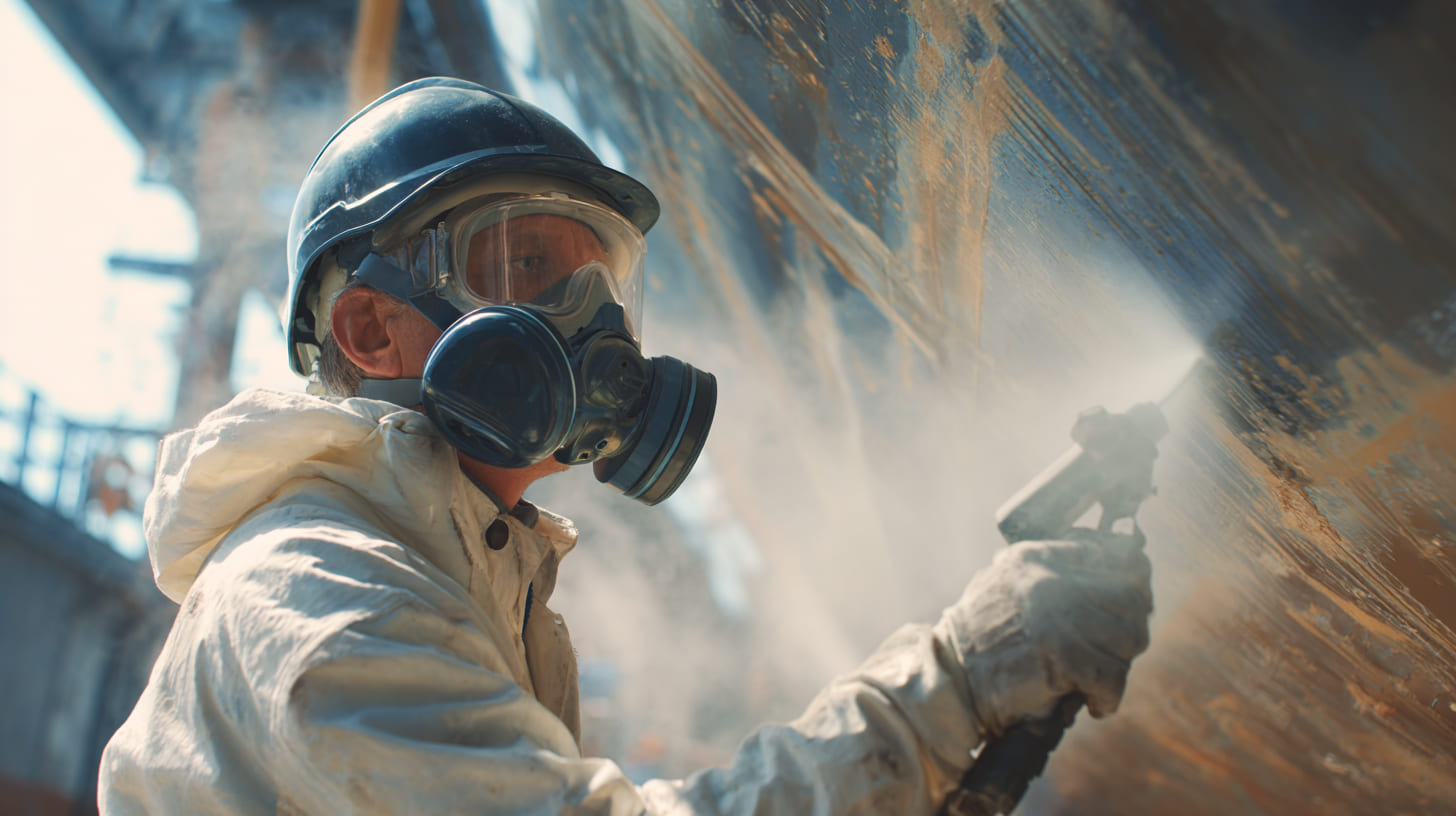
The sandblast is a fairly simple technique: projecting sand or other abrasives under pressure to remove rust, old paint, and other rests of antifouling or any layer that is on the hull.
However, it's important to understand exactly what it's used for on boats. The sea is unforgiving: salt, humidity, and the small bumps and knocks of daily use create a mixture of corrosion and dirt that ultimately affects the boat's performance and fuel consumption.
On the other hand, if you try to paint over a poorly prepared surface, the new layer will usually peel off within a few months. And of course, nobody wants to repeat a job that requires time and money.
Advantages of sandblasting in boat maintenance
When someone talks about "sandblasting the hull," it sometimes sounds like an optional step, and yes, it can be. But then you see the result and understand why so many skippers rely on this technique. The truth is, sandblasting isn't just about cleaning; it's about giving the boat a solid foundation to keep sailing without any surprises.
And, by the way, when you've spent years watching hulls go in and out of the boatyard, you immediately notice which ones have been properly sandblasted and which ones haven't.
Removal of rust and old paint
There's no mystery here: at sea, rust appears before you know it. Between salt spray, humidity, and minor scratches, any hull begins to accumulate layers and stains that won't come off with a simple cleaning.
The sandblaster goes right through there, removing old paint, layers of antifouling that are no longer effective, and corroded areas that need to be addressed as soon as possible. The great thing is that it leaves everything uniform, without strange patches or half-finished areas, which is typical when you try to repair things by hand.
Ideal preparation for applying primer and antifouling
Now, the real trick is what comes next. For the primer and antifouling to adhere properly, the surface must be completely clean and have the right texture—not too smooth, not too rough. And frankly, if you skip this step or do it halfway, the paint will peel off within months, and you'll have to do it all over again.
Sandblasting leaves the hull ready to receive new layers, and that's noticeable from the first coat of the roller: the paint covers better and adheres as it should.
Improved hull durability and long-term protection
That said, the biggest advantage of sandblasting, is not always visible on the first day, but it becomes apparent over the months. A well-sandblasted and protected hull is more resistant to humidity, temperature changes, and the natural wear and tear of going in and out of the water.
And you know how it goes: every chip that doesn't appear now is one less problem a year from now. Sandblasting, done at the right pressure, extends the hull's lifespan and prevents small damaged areas from developing into something more serious.
Types of sandblasting used on ships
When someone mentions sandblasting a hull, you immediately picture that fine cloud of dust that leaves everything white for a while. But luckily, nowadays there's a wider variety of materials and methods than you might think. And the interesting thing is that each one has its own unique characteristics, so to speak.
On one hand, there are the more classic abrasives, which are used to remove hard layers without hesitation, and on the other hand, there are the gentler, almost surgical systems, designed for boats that need pampering.
Traditional mineral sand
Mineral sand is the tried and true, the kind that's been used in boatyards for decades. It's abrasive, powerful, and very effective when it comes to removing rust or old paint that won't last another season. The great thing is that it doesn't waste time: it hits hard, cleans, and leaves the hull with a uniform texture that greatly improves primer adhesion.
Glass microspheres or fine shot
Here the story changes considerably. Glass microspheres and fine shot are used when you're looking for a smoother, more controlled finish. The advantage is that they "comb" the surface without removing too much material, which is ideal for hulls that don't need a deep clean, but rather a light touch-up before repainting.
Approximate cost of sandblasting boats
The price of sandblasting boats varies considerably depending on the size of the vessel, the condition of the hull, and the type of abrasive to be used.
At Projectes Sastre we are specialists in sandblasting in Mallorca
Sandblasting is one of those jobs that makes an immediate difference. The cleaning is thorough, the hull is even and ready for a new primer that will adhere well, and the boat moves with much greater ease. However, to ensure that finish lasts, it's advisable to have it checked every season and avoid accumulating layers of paint that only mask problems.
And if you notice dull areas or flaking that shouldn't be there, it's best to leave it in the hands of the person who works on it daily. At Projectes Sastre we are specialists in Sandblasting Cleaning in Mallorca and we can leave the hull as good as new.