It's quite common for polished floors to accumulate layers of wax over time, which ultimately do more harm than good. At first, they might seem to add shine, but that illusion is short-lived: the floor looks dull, with a yellowish tone and marks that are impossible to hide. That's why it's crucial to know how to properly remove wax from a polished floor, so as not to damage the surface and to restore its original appearance.
Materials like marble, terrazzo, granite, or even polished concrete already have their own natural shine. When unsuitable products are applied, a film forms that traps dirt and distorts the finish.
Why does wax accumulate on a polished floor?
One of the most common mistakes is using cleaning products that contain waxes without realizing it. With each mop, we leave one layer on top of another, and the worst part is that they don't wash off easily with water.
The most common reasons why this happens:
- Frequent use of products containing wax
- Application of acrylic waxes to try to "give shine"«
- Lack of professional maintenance
- Scrubbing without proper rinsing
The result: uneven areas, dull-looking floors, and that nagging feeling that they're never truly clean. This is where learning how to remove wax from a polished floor without making things difficult or damaging the material comes in.
Before you begin: identify the floor type
Not all floors react the same way to the same products, so before doing anything it's important to know what material we're dealing with:
- Polished marble: very sensitive to acidic products
- Polished terrazzo: more resistant, but it shuts down if you use something you shouldn't.
- Polished graniteIt lasts longer, although it also loses its shine with wax on top.
- Polished concreteYou need specific products; not just any product will do.
Knowing this helps to avoid costly mistakes.
Step-by-step instructions for removing wax from a polished floor
1. Initial cleaning
The first step is to remove dust and surface dirt. To do this:
- Sweep or vacuum the entire area thoroughly.
- Scrub with warm water and a neutral detergent
- Let it dry before continuing
This will help you see better where the most wax has accumulated.
2. Professional paint stripper: the trick that works
The safest and most effective way to remove wax from a polished floor is to use a specific stripper for stone surfaces.
This is how it's applied:
- Dilute the product according to the manufacturer's instructions.
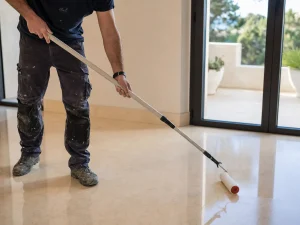
- Apply it with a mop or sponge, without soaking too much.
- Leave on for 5 to 10 minutes
- Scrub with a white scouring pad or a soft-bristled brush
- Remove the product with plenty of water
If there are many layers, you may have to repeat the process.
3. Thoroughly clarified
Once the wax has been removed:
- Rinse several times with clean water
- Avoid leaving any product residue.
- Dry with a mop or a microfiber cloth
Improper rinsing can leave the floor with a whitish film and remove its natural shine.
Products that are best left untouched
There are some things that are best left out of this task. Some home remedies may seem practical, but they pose a risk to the polish:
- Vinegar
- Bleach
- Ammonia
- Anti-limescale products
- Metal scouring pads or blades
These materials can scratch, stain, or even require a complete repolishing.
How to restore shine after removing wax
Once the surface is cleaned, it's normal for the floor to look a bit dull. That doesn't mean it's damaged; it's simply lost the artificial shine the wax gave it.
To bring life back to the floor:
- Professional crystallisation (ideal for marble or terrazzo)
- Machine buffing
- Repolished if there is significant wear
The important thing is not to reapply wax, or the problem will reappear sooner than you think.
How often should the wax be removed?
Ideally, it would never be necessary. Polished floors don't need wax: their natural shine is maintained with proper polishing or crystallisation, without adding surface layers.
If wax needs to be removed, it's because it was applied incorrectly or with unsuitable products at some point. In these cases, the frequency will depend on the use of the space and how much time has passed since the last improper application.
- Housing: every 12–24 months if it has been waxed due to lack of knowledge
- Commercial premisesAnnual inspection to detect remains
- CommunitiesProfessional maintenance to prevent buildup
The important thing to understand is that wax is not part of regular maintenance, but rather a problem to be corrected.
How do you know if your floor needs waxing?
There are signs that say it all:
- Uneven shine
- Footprints that cannot be erased
- Yellowish color
- Sticky feeling when walking
- It gets dirtier than usual
Does this sound familiar? Then it's time to act.
Projectes Sastre: experts in floor polishing in Mallorca
At Projectes Sastre, we are dedicated to polishing and vitrification of floors in Mallorca. We work with marble, terrazzo, granite, and concrete, applying specific treatments depending on the material. We remove accumulated wax using safe techniques, restoring the natural shine and extending the life of the floor. Accumulated wax is, in fact, the primary cause of yellowing in white marble: we develop this in Why does a marble floor turn yellow?.
Does your flooring need replacing? Contact us and we'll advise you with no obligation. A good floor polishing can make all the difference.