Floor polishing in Mallorca
We remove scratches, water rings and wear from marble, terrazzo, granite and concrete floors without lifting a single tile or doing any building work, in homes, apartment buildings, hotels and businesses across the island.
€10-25/m² in 2026
- Since 1972 in Inca
- Three generations
- Free visit and quote

In short
Polishing a floor means grinding away the worn top layer with diamond discs until it is flat and scratch-free, without lifting the floor or doing any building work. In Mallorca it costs €10-25/m² in 2026, and 100 m² can be polished in 2 to 4 days, depending on the material and its condition. Projectes Sastre, a family business from Inca, has been polishing floors since 1972 and has worked in hospitals, hotels and Palma Airport.
Why Projectes Sastre
Floor polishers for homes, hotels and hospitals
-
01
What your floor needs, not the priciest option
If your floor is smooth and has only lost its shine, we suggest buffing rather than a full polish, even though we earn less.
-
02
Hospitals, airport and hotels
We have polished and treated floors at Son Espases University Hospital, Son Llàtzer Hospital and Palma Airport, as well as at clinics and hotels across the island.
-
03
Prices up front
We publish what each material and finish costs in 2026, so before you call us you already know the price range for your floor.
-
04
We see every job through
From an apartment bathroom to a hotel lobby, we see every job through to the end, whatever its size, and take responsibility for any damage.
Which floors can be polished?
All stone and cement-based floors. Hydraulic tiles and terracotta are more delicate, so they are restored rather than polished. Choose yours to see how we treat it.
-
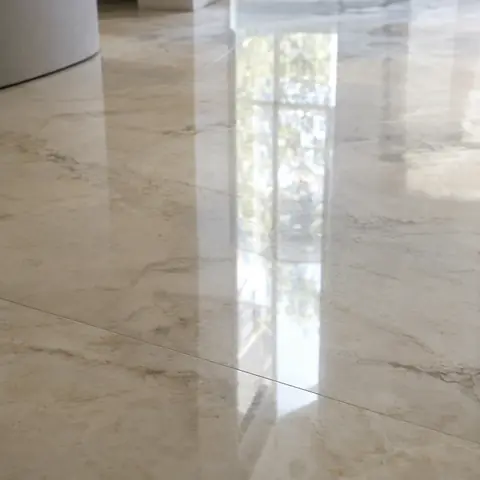
Marble polishing
It gets its mirror shine back without replacing a single tile, on stairs and entrance halls too. It is the stone that scratches most easily, and the one that responds best to crystallisation.
-
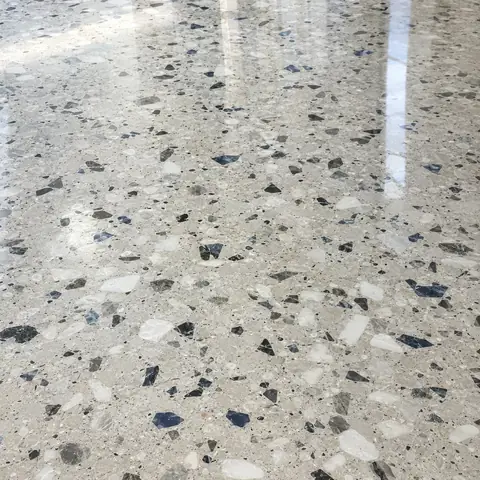
Terrazzo polishing
The floor of so many 1960s and 70s apartments: ground down, with the joints filled and a good finish, it almost always looks as good as new.
-
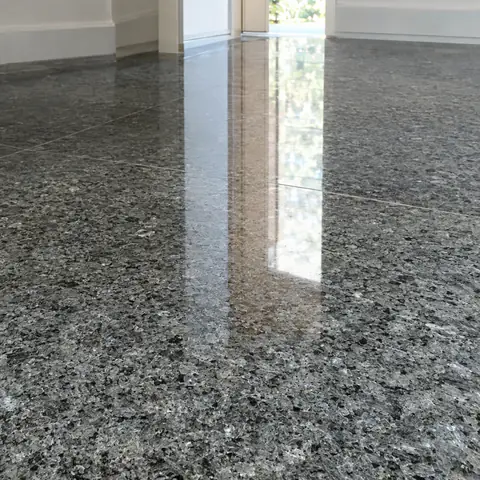
Granite polishing
The hardest stone needs more diamond passes than marble, and its shine comes from the polishing itself, because granite cannot be crystallised.
-
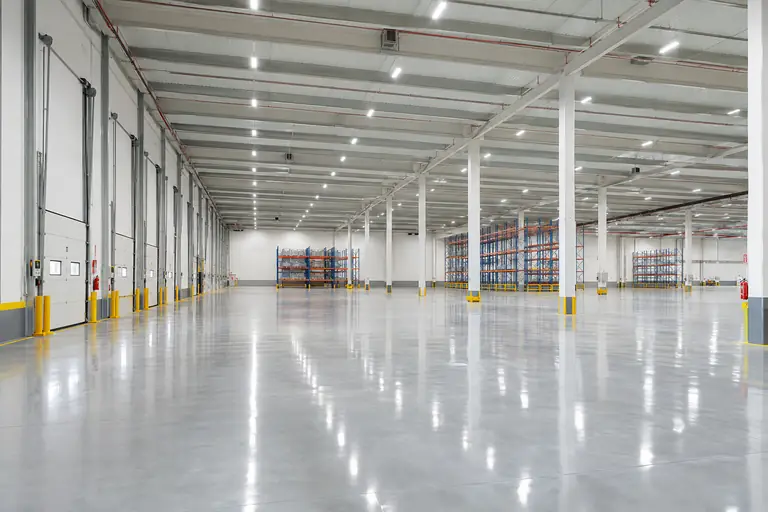
Polished concrete
We polish the concrete you already have, without adding any coating, and harden it with a lithium treatment. In garages, warehouses, shops and homes.
-
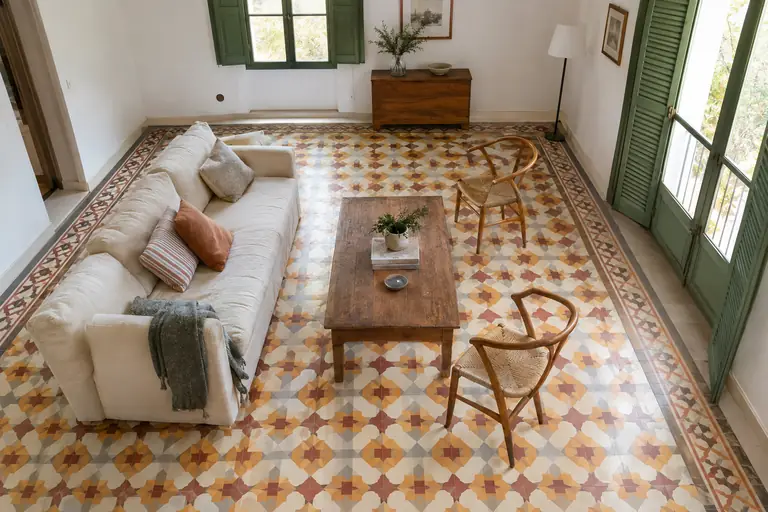
Hydraulic tile restoration
The patterned tiles of old houses and country estates: we grind them just enough to keep the pattern and seal them with a matt or satin finish.
-
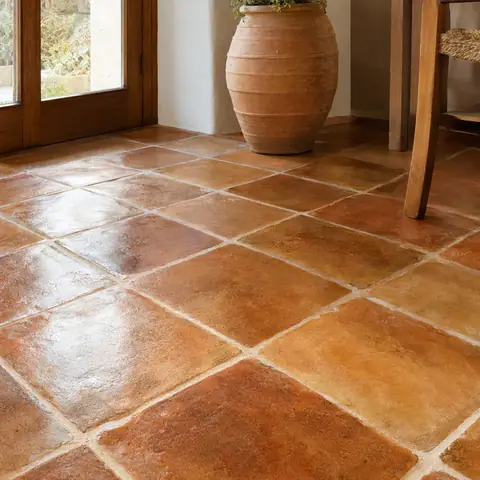
Terracotta floor restoration
The terracotta of village houses and country estates: we strip it, secure the loose tiles and seal it with linseed oil, wax or a water repellent.


How much does it cost to polish a floor in Mallorca?
Between €10 and €25 per square metre, depending on the material. Within each range, the condition of the floor decides: the more scratched, stained or worn it is, the more diamond passes it needs.
| Service | 2026 price |
|---|---|
| Terrazzo polishing | €10-20/m² |
| Marble polishing | €10-25/m² |
| Granite polishing | €12-25/m² |
| Polishing existing concrete | €12-25/m² |
| Hydraulic tile restoration | Per project, from around €700 |
| Buffing marble or terrazzo, without grinding the floor down | €6-10/m² |
| Crystallisation after polishing | +€2-4/m² |
| Vitrification after polishing | +€3-6/m² |
| Filling joints in old terrazzo | +€0.50-1/m² |
| Marble or terrazzo over 300 m² (hotel or apartment building) | Around €9-10/m² |
Guide prices for 2026. We give you a fixed price once we have seen and measured the floor. You'll find the full breakdown in three guides: how much it costs to polish a marble floor, how much it costs to polish terrazzo and how much it costs to vitrify a floor.
How we polish a floor, step by step
This is a full polish, the kind that removes scratches and water rings, from the first visit to handover. The order is the same for every floor; what changes with the material is the grit we start with, the number of passes and the finish.
- 01
Initial survey
We identify the material, check scratches, water rings, joints and damp, and measure the floor to recommend the treatment it needs.
- 02
Protection and stripping
We protect skirting boards, doors and built-in furniture, and strip off the wax and products built up over the years.
- 03
Grinding
With coarse-grit diamonds we level the tiles and remove deep scratches.
- 04
Joints
We fill open joints and pores, which are very common in old terrazzo.
- 05
Honing
We move up through finer grits until the surface is even: 3 to 4 passes on marble and terrazzo, and 4 to 6 on granite.
- 06
Finish and clean-up
We finish with buffing, crystallisation or vitrification, depending on the floor and how it is used, then clean up and check the result with you.
Polishing your floor without filling the house with dust
We work room by room, wet or dry with extraction connected to the machine, so the dust doesn't hang in the air and you can carry on living at home. Every evening the house is usable, except for the area we are working on that day.
And it's not just about comfort: the dust from grinding stone, terrazzo or concrete contains crystalline silica, which occupational health rules classify as carcinogenic. We explain it in how we polish floors without dust while you keep living at home.

Finishes and treatments: shine, protection and grip
Polishing leaves the floor flat; the finish decides how much it shines, how long it lasts and whether it is slippery. These are the six we offer.
-
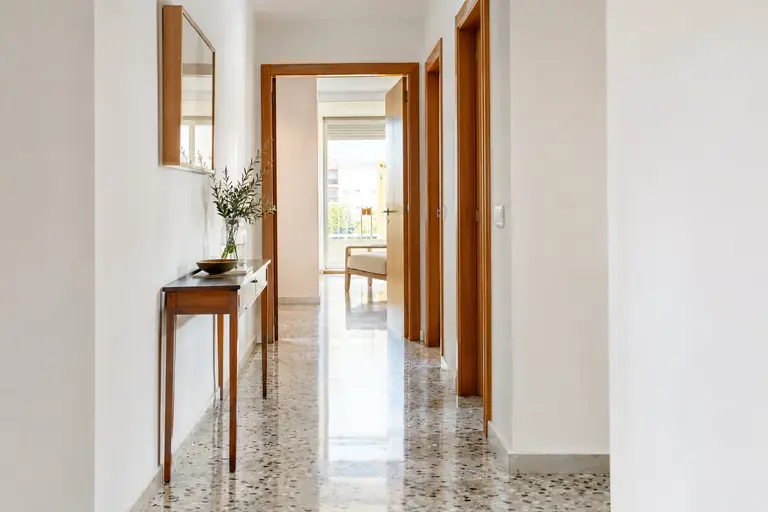
Floor vitrification
A protective resin layer, applied in several coats over the polished floor, that holds off stains and wear. You can walk on it after 12-24 hours.
-
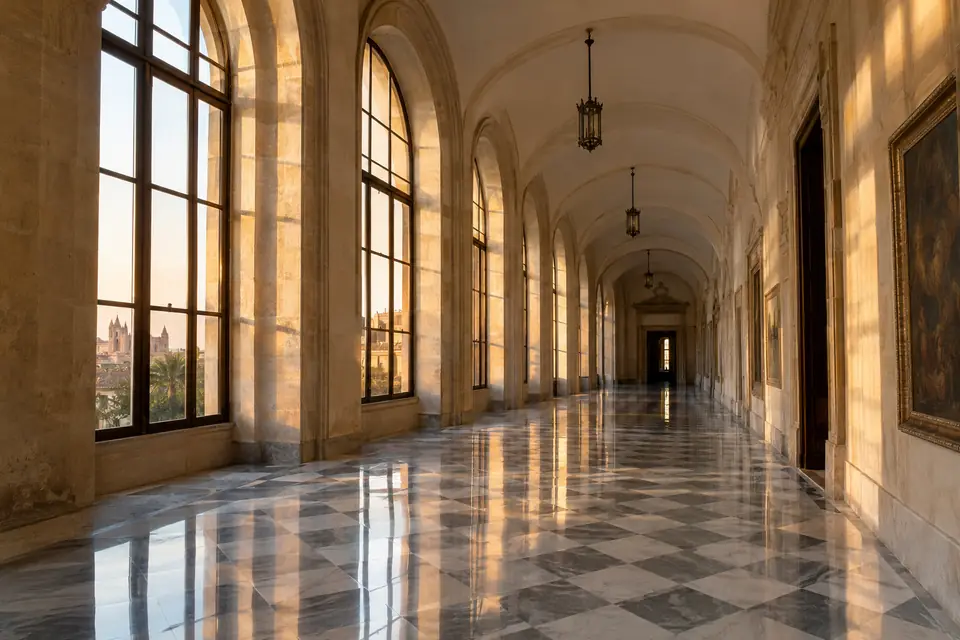
Floor crystallisation
It reacts with the lime in marble and terrazzo, hardening the surface and giving it a mirror shine without adding a layer. It does not work on granite.
-
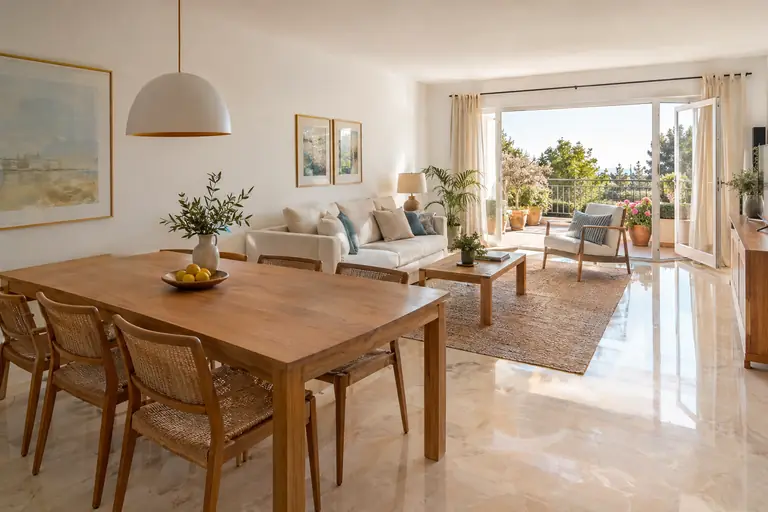
Floor buffing
For a smooth floor that has lost its shine: buffing brings it back without grinding the floor down, and it works as maintenance between polishes. It does not remove scratches.
-
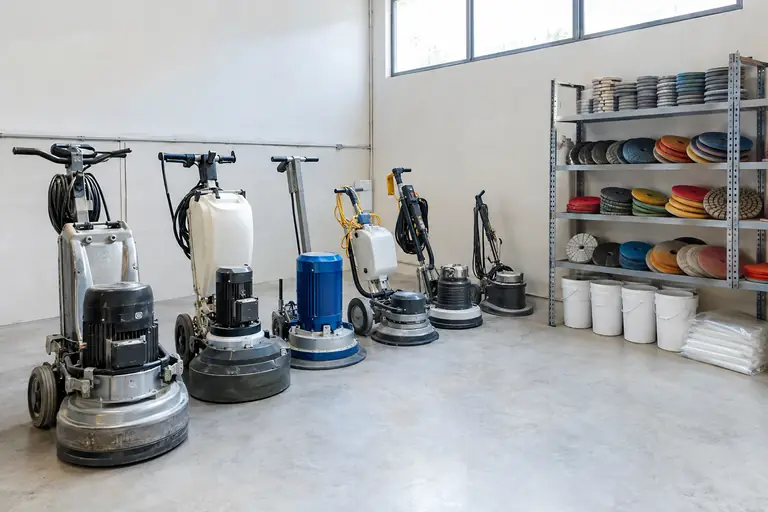
Diamond floor grinding
Industrial diamond discs that remove scratches and uneven edges and leave the floor ready for its finish; on granite, all the way to a fine grit.
-
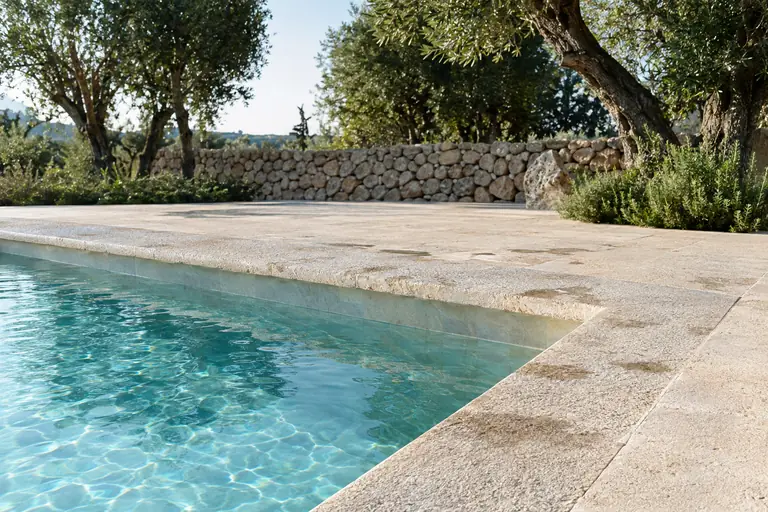
Floor bush hammering
The opposite of shine: a pitted texture on stone or concrete that doesn't slip. For terraces, entrances, ramps and pool edges.
-
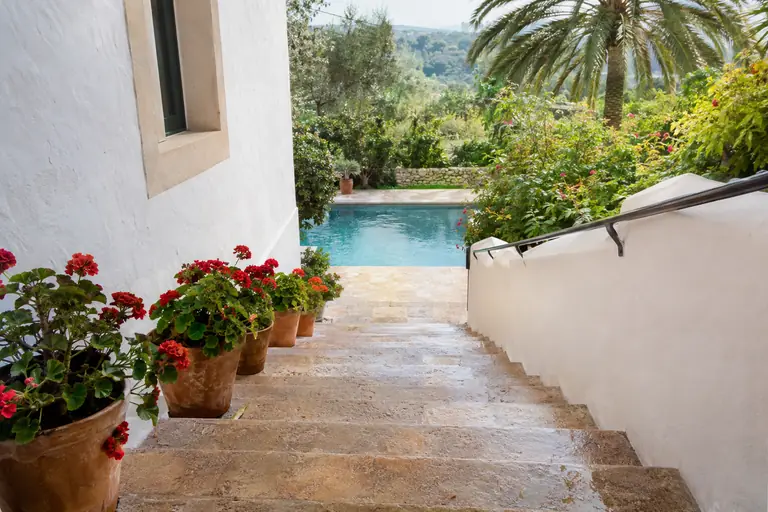
Anti-slip treatment
For pools, terraces, stairs and bathrooms that are slippery when wet: more grip without replacing the floor.


Floor polishing in Palma and the rest of Mallorca
In Palma we polish the marble of grand entrance halls, the terrazzo of 1960s to 1980s apartments and the hydraulic tiles of the old town buildings, in every neighbourhood: from the Old Town, Santa Catalina and Es Jonquet to Portixol, Es Molinar, El Terreno, Son Espanyolet, the Ensanche and Pere Garau. In the centre, with its narrow streets and no parking, logistics are part of the job too: we always keep access clear and clean up at the end of each day.
In apartment buildings we work with the property manager and polish the entrance hall and stairs in stages, with the lift and letterboxes protected, so residents can still come and go. An entrance hall is usually done in one or two days; with a staircase of several floors, a little longer.
Every day we set out from our workshop in Inca, in the centre of the island, with our own machinery and team. In under half an hour we reach the Raiguer, the Bay of Alcúdia, Pollença, the Pla and the Serra de Tramuntana, and in about forty minutes Palma and the south.

Hotels, apartment buildings, building projects and areas of the island
Every job is organised differently depending on who it is for and where it is.
-
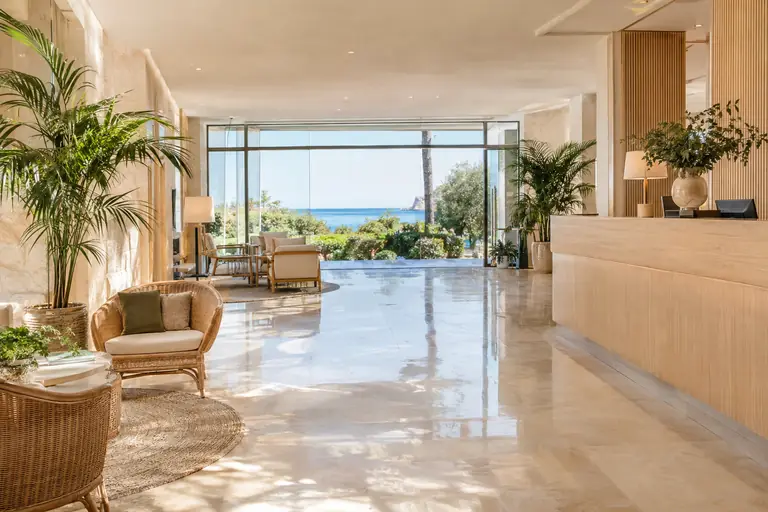
Floor polishing for hotels and apartment buildings
Receptions, entrance halls and stairs, area by area and outside opening hours, without closing the business or blocking access. Over 300 m² of marble or terrazzo, around €9-10/m².
-
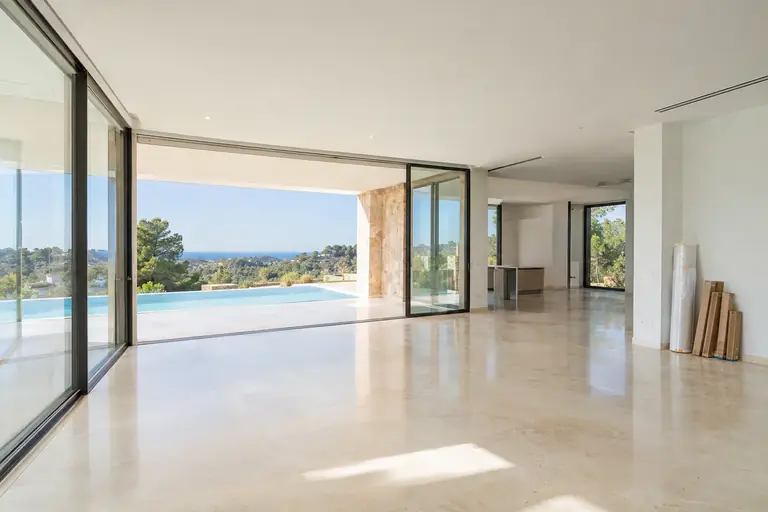
Polishing for new builds and renovations
A levelling polish when the floor is laid and a finishing polish at the end, once no other trades are coming in. For builders, architects and renovation companies.
-
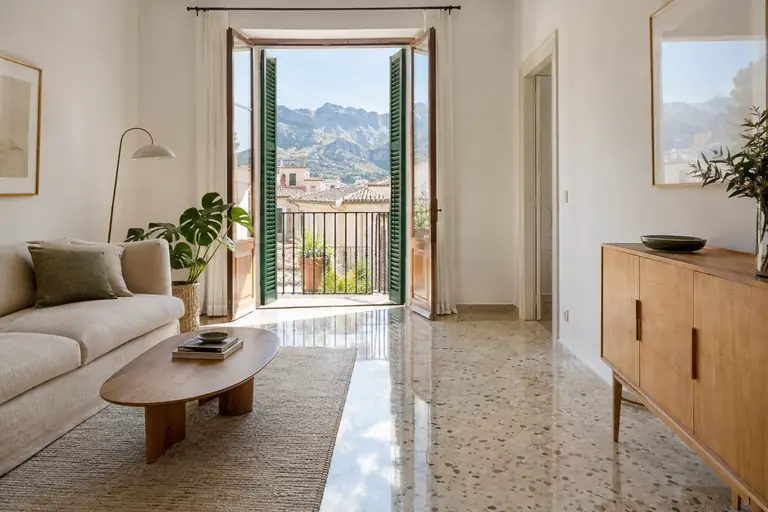
Floor polishing in Inca and the north
The old houses of the Raiguer and the Pla, and the hotels and rural hotels (agroturismos) of the north, a few minutes from our workshop.
-

Floor polishing in Calvià and the south-west
Santa Ponsa, Portals Nous, Illetes, Palmanova, Peguera, Camp de Mar and Andratx, where sea salt, chlorine and sand wear the floor down more than footfall does.


What people ask us
Frequently asked questions about floor polishing in Mallorca
Any other questions? Tell us what kind of floor you have and we'll get back to you, with no obligation.
WhatsAppHow much does it cost to polish a floor in Mallorca?
In 2026, between €10 and €25/m² depending on the material: terrazzo €10-20, marble €10-25, and granite and existing concrete €12-25. On top of the polishing, crystallisation adds €2-4/m² and vitrification €3-6. A 100 m² marble floor comes to around €1,000-2,500, and in hotels and apartment buildings with more than 300 m² of marble or terrazzo the price drops to around €9-10 per square metre.
What is the difference between polishing and buffing a floor?
Polishing means grinding the floor down with diamond discs: it removes scratches, water rings and uneven edges and leaves it flat. Buffing only brings the shine back to the surface, without removing wear, and works as maintenance between polishes (€6-10/m² for marble and terrazzo in 2026). After polishing comes the finish: crystallisation for the mirror shine of marble and terrazzo, or vitrification, a protective layer that makes the result last longer. More detail in differences between polishing and buffing the floor.
How long does it take to polish a 100 m² floor?
From 2 to 4 days, depending on the material: terrazzo, 2 or 3, and marble and granite, 3 or 4. With crystallisation, marble takes 4 or 5 days; with vitrification, any floor needs 5 to 7 days, including drying time between coats. With buffing or crystallisation, you can walk on it the same day; with vitrification, after 12-24 hours, and furniture can be placed after 48-72 hours.
How often should a marble or terrazzo floor be polished?
In a home, a thorough polish lasts more than ten years if the floor is looked after. In between, you only need to renew the finish when it loses its shine: buffing lasts 12 to 24 months, crystallisation 2 to 3 years and vitrification 3 to 5. In entrance halls, hotels and busy shops, everything lasts less. Sweeping often helps: sand and grit scratch the floor like sandpaper.
Is a polished floor more slippery?
Not necessarily. Dry, a polished floor doesn't lose grip; wet, any stone with a mirror shine grips less. In hotels, shops and premises open to the public, Spain's Building Code (CTE) requires slip-resistance class 1 in dry interiors, class 2 in entrances and wet areas, and class 3 outdoors and around pools. That calls for a satin finish, bush hammering or anti-slip treatment.
Is it better to polish the floor or replace it?
If the floor is stone, terrazzo or concrete and still intact, polishing is almost always the better choice. In 2026, polishing costs €10-25/m² and takes a few days, with no building work. Replacing it costs €18-70/m², plus the work of taking up the old floor and clearing the rubble. Replacing only pays off when the floor is broken in many places or there is a structural problem underneath. We compare both options in polish or replace the floor.
How do I choose a floor polishing company in Mallorca?
Ask them to see the floor before they give you a price: a price over the phone, without seeing the floor, is guesswork. Ask which treatment they propose and why, how many diamond passes are included, how they control dust and who is responsible if something gets damaged. And compare what each quote includes: a very cheap quote usually leaves out the finish, the joints or the repairs. We go into it in how to choose a floor polishing company.
Our work, your best guarantee
How much would it cost to polish your floor?
Tell us what kind of floor you have, which town it's in and roughly how many square metres it is. We'll call you, come and measure it and tell you what treatment it needs. Before you think about replacing it, let us see it: it can almost always be saved.
- 971 50 39 36
- info@projectessastre.com
- C/ General Weyler, 29, 07300 Inca (Mallorca)
- Monday to Friday, 8:30 am to 4 pm