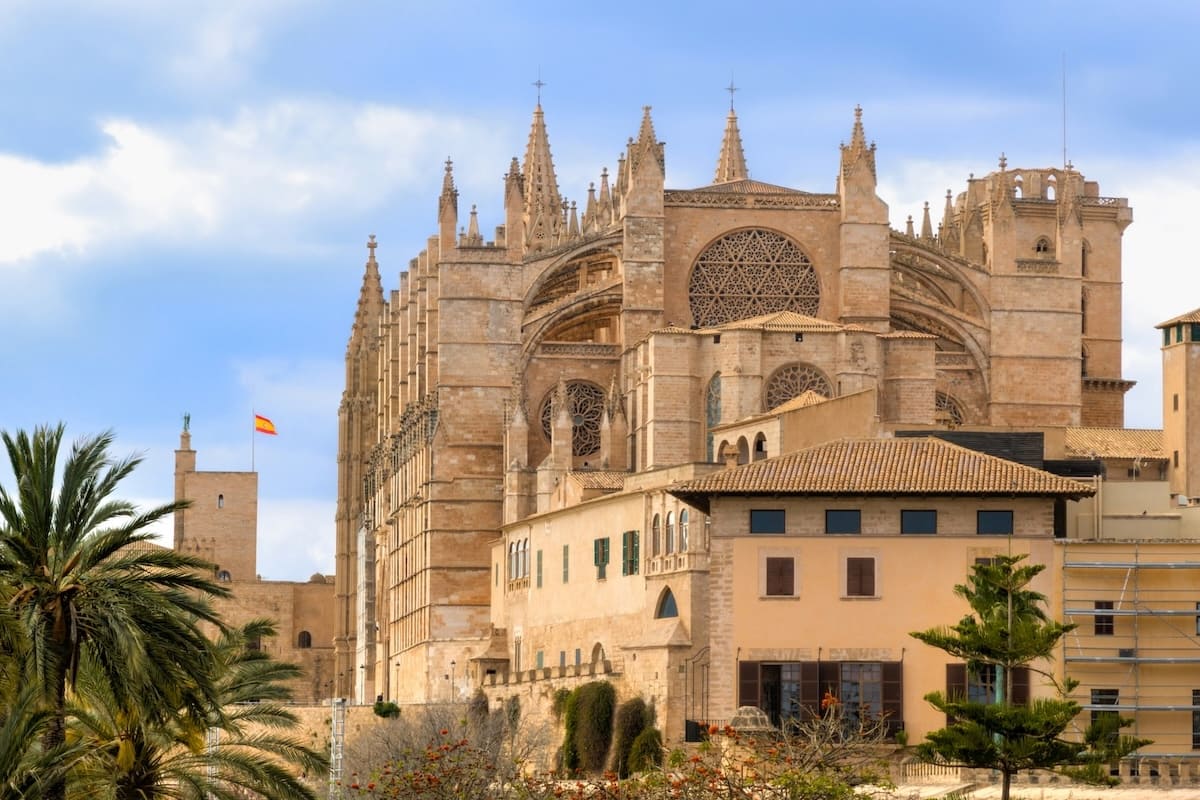
Sandblasting the cleaning of marés stone facades in Mallorca restores the original stone by removing black scale, saltpeter, paint, and other contaminants, using fine abrasives and low pressure to avoid damaging the stone. Marés is porous and delicate, so it requires experience and precise calibration. After cleaning, it is advisable to apply a water repellent for protection. At Projectes Sastre, we treat marés stone throughout the island, offering free estimates and backed by over 50 years of experience.
Marés is the stone of Mallorca. Churches, estates, the facades of Palma's old town, and villas all over the island are built with this golden sandstone. But marés is porous and delicate, and over the years it accumulates dirt, black crusts, and damp stains that dull its color. Proper sandblasting restores its vibrancy. The problem is that improper sandblasting destroys it, and there are too many examples of this on the island. That's why this job isn't for just anyone.
Why does the marés stone in Mallorca get dirty and dark?
The marés sandstone becomes dirty and dark because it is a very porous sandstone that absorbs moisture, salt, and pollution, forming black crusts and deposits on the surface. The proximity to the sea and the Mediterranean climate accelerate this deterioration across the island.
The process is slow but relentless. Moisture penetrates the pores, carrying salts that crystallise and gradually disintegrate the stone from within. Urban pollution and rain deposit a dark crust, especially in sheltered areas that are not washed away by direct rainfall. On facades near the sea, salt air adds further damage. The result is a stone that loses its characteristic golden hue and begins to flake. Cleaning it in time is not just about aesthetics: it halts the deterioration. It is one of the delicate tasks we undertake as Sandblasting specialists in Mallorca.
How do you clean a sandstone facade with a sandblaster without damaging it?
A façade made of marés stone is cleaned by sandblasting using fine abrasives and low pressure, adjusted to the specific hardness of that stone, to remove dirt without damaging the surface layer. The key is calibration: neither too much pressure nor an aggressive abrasive.
This is where the skill lies. Marés stone is soft compared to granite or metal, and poorly regulated pressure "eats away" at it, leaving the facade with an eroded and irreversible appearance. That's why we always start by testing on an inconspicuous area to adjust the pressure and abrasive before working on the entire surface. We work respecting the original texture of the stone, removing only the crust and dirt. It's a process that requires skill and experience, not brute force. We explain how the technique works in general in our guide on the sandblasting process.
What does the cleaning service for sandstone facades include?
The cleaning service for sandstone facades covers everything from the initial assessment to the final protection of the stone. The following services are included:
- Facade inspection and calibration test in a discreet area.
- Protection of woodwork, glass and nearby elements.
- Controlled pressure sandblasting of the entire surface.
- Removal of black crusts, saltpeter, paint residue and contamination.
- Water-repellent or stone consolidation treatment, if requested by the customer.
- Clean the work area when finished.
Each facade is different, and the scope of work is defined during the site visit. The important thing is that the sandstone is removed clean and, above all, undamaged. This is part of our comprehensive service Sandblasting Cleaning in Mallorca.
How much does it cost to clean a sandstone facade in Mallorca?
The price of sandblasting a marés stone facade in Mallorca depends on the square footage, height, condition of the stone, and accessibility, so it is always assessed on-site. It is not a service that allows for a fixed price without inspecting the facade.
A low, accessible facade is nothing like a multi-story building that requires scaffolding or rope access work. The condition of the stone also matters: a light crust can be removed quickly, while a heavily deteriorated facade demands more time and care. That's why, instead of giving a vague estimate that can't be sustained, we'll come and see it, measure it, and provide a free, fixed-price quote. This way, you know the real cost before we even begin.
What treatment is applied after cleaning the marés?
After cleaning the marés stone, it's advisable to apply a water-repellent treatment that repels water without sealing the pores, protecting the stone from the moisture and salt that damaged it. On highly fragmented stones, a consolidant can be applied beforehand to strengthen cohesion.
Cleaning without protecting is leaving the job half done. Once the crust has been removed, the marés is left with its pores open and is vulnerable to damp again. A water repellent creates a barrier that lets the stone breathe but stops water getting in, slowing the formation of new crusts and the crystallisation of salts. It is especially important on façades near the sea. This care for stone heritage is in line with what is protected by the Llei de patrimoni històric de les Illes Balears, which ensures the preservation of traditional Mallorcan architecture.
Why choose a specialist to clean marés stone and not a generic company?
It's best to choose a specialist because marés is a soft, porous stone that is irreversibly damaged if cleaned with unsuitable pressure or abrasives. A company inexperienced with marés can leave the facade in worse condition than before, and that's irreparable.
Cleaning metal or removing paint from a concrete wall is one thing; treating historic sandstone is quite another. We've seen marés facades "eaten away" by poorly calibrated jets, their surfaces eroded and their relief lost forever. The difference between a good job and a disaster lies in knowing how to read the stone, adjusting the equipment, and having the patience to test before proceeding. More than 50 years treating floors and surfaces in Mallorca have taught us to respect each material. With marés, that experience isn't a luxury: it's what separates restoring a facade from ruining it.
When NOT to use sandblasting on a marés stone facade
Sandblasting is not always the right method for marés stone. It is not advisable when:
- The stone is so fragmented that the abrasive, however gentle, would remove healthy material: that's where consolidation comes in first.
- The facade has very fragile ornamental elements or historical polychromy that require more delicate restoration techniques.
- What makes the stone dirty is unresolved structural dampness: cleaning without addressing the source only delays the problem.
In these cases, we'll tell you during the visit and suggest the correct technique. Rather than do work that could damage the marés stone, we prefer not to do it at all.
Frequently asked questions about cleaning marés stone facades in Mallorca
Does sandblasting damage the marés stone of a facade?
Sandblasting does not damage marés stone if applied with a fine abrasive and low pressure, calibrated for that type of stone. Damage occurs when too much pressure or an aggressive abrasive is used, and then it is irreversible. Therefore, it is essential that a specialist perform the cleaning, testing and adjusting the equipment before cleaning the entire facade.
How much does it cost to sandblast a marés stone facade in Mallorca?
The price depends on the size, height, condition of the stone, and accessibility, so it's always assessed after viewing the facade. It's not a service with a fixed price. At Projectes Sastre, we measure the facade, evaluate its condition, and provide a free, no-obligation, fixed-price quote for any project in Mallorca.
Is any treatment necessary after cleaning the marés?
Yes, after cleaning the sandstone, it's highly recommended to apply a water repellent to protect it from moisture and salt, which are what caused its deterioration. If the stone is very crumbly, a consolidant may be necessary first. Cleaning without protecting it leaves the pores open, and the facade will get dirty and deteriorate more quickly.
Is it possible to clean the marés stone without raising dust or polluting the surroundings?
Sandblasting generates dust, but this is controlled by protecting the surrounding area and, when necessary, using techniques that reduce dust dispersion. We protect woodwork, windows, and nearby areas before starting and clean up afterward. On facades in sensitive areas, we adjust the method to minimize disruption to residents and passersby.
Do you have a sandstone facade that needs restoring?
If you have a blackened or damaged marés façade in Mallorca, leave it in the hands of people who know how to treat it. We come and see it, run a risk-free test and give you a free, fixed-price quote. Call 971 503 936, email info@projectessastre.com or contact us on WhatsApp. We work all over the island with the care that Mallorcan stone deserves. For a marés façade the usual range is €15 to €30/m², and the full breakdown, with the other jobs, is in our guide to sandblasting prices in Mallorca.