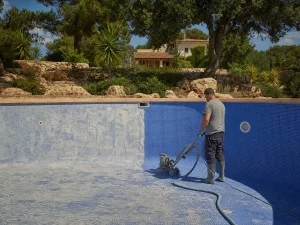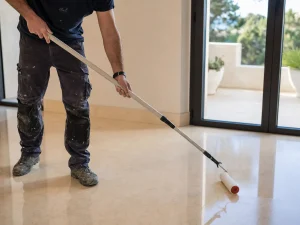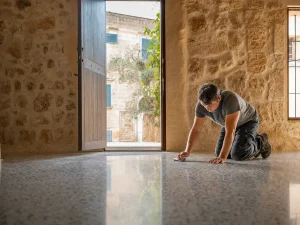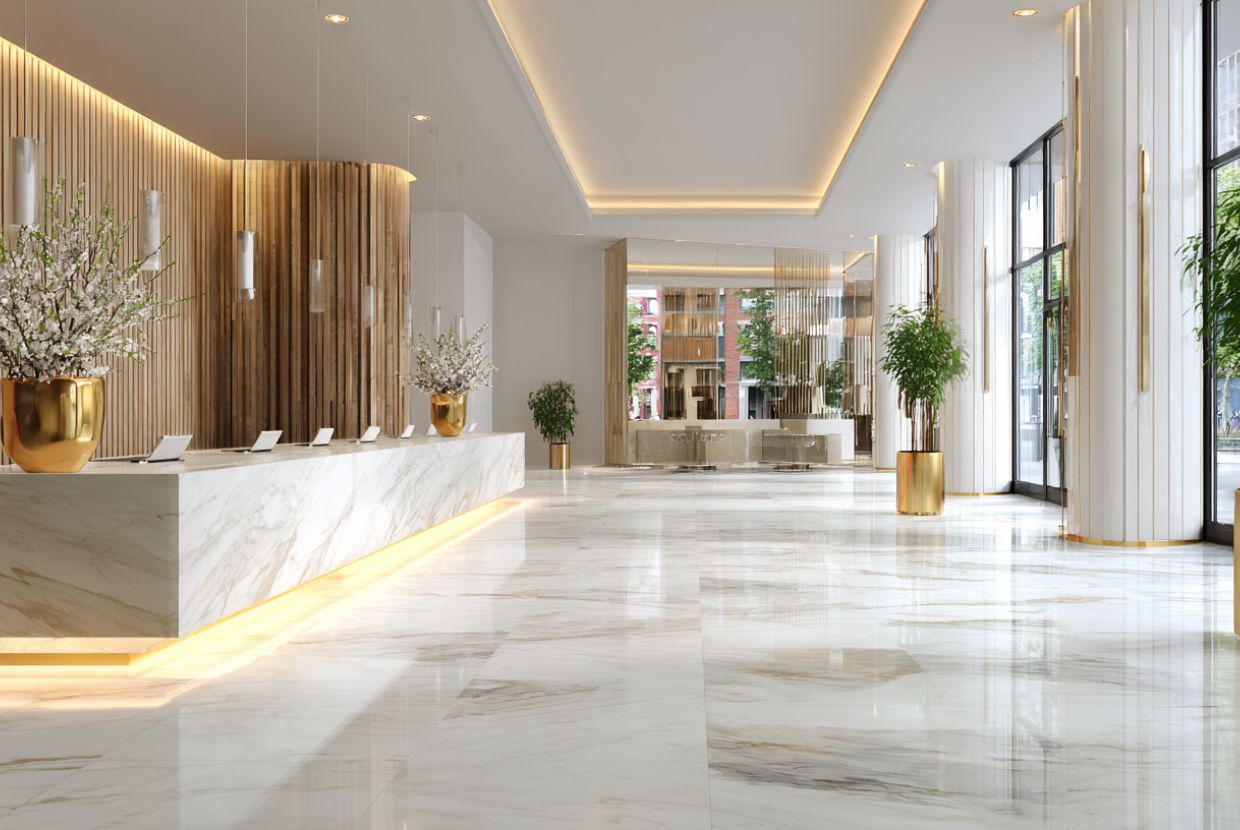
The floors of a hotel or restaurant see it all. They receive thousands of footsteps, spills, temperature changes, and also… that invisible hustle and bustle that, little by little, wears them down. Therefore, caring for them isn't just a matter of making them look nice. It's about safety, daily cleaning, and how long the materials last.
This plan we're sharing with you is designed to do just that: help you keep your pavements up to date, without affecting your daily work. And while it sounds like a technical task—and in part, it is—there are also many practical decisions that make all the difference.
Why is floor maintenance so important for the hospitality industry?
Think about it: in a space where so many people pass through, the floor suffers constantly. Whether it's from humidity in a kitchen, shopping carts moving back and forth, or simply the rubbing of thousands of shoes every day. All of this leaves its mark, literally.
Therefore, floor maintenance for hospitality establishments cannot be improvised. It's not enough to clean when it looks dirty. Action must be taken before deterioration becomes noticeable. And to do so, a plan is needed that takes into account the type of flooring, how much it's used, and its specific needs.
And of course, there's another important part: complying with regulations. If a floor is more slippery than it should be, for example, it doesn't just become a hazard; it can also lead to legal issues if something happens. So, yes, this goes far beyond aesthetics.
What to do each week (and why)
Kitchens and technical areas
These areas often feature non-slip stoneware or resin-based flooring (such as epoxy or polyaspartic). Maintenance should include:
- Daily cleaning with alkaline products to attack grease and food residue before they accumulate.
- Mechanical mopping once a week, using a scrubber-vacuum. It's faster and leaves the floor almost dry.
- Brush joints and drains weekly as well. This will prevent unpleasant odors or blockages.
- Check for possible damage, no matter how small. Fixing it in time prevents bigger problems.
Hallways, rooms and common areas
Here, flooring is typically vinyl, VCT tile, or laminate flooring. To maintain them properly:
- Daily sweeping and dust mopping, which helps remove scratchy grit.
- Scrub with neutral detergent to preserve the finish without removing its shine.
- Place mats in entrances, because yes, they really help reduce dirt entry.
Natural stone (marble, terrazzo, etc.)
Very common in areas such as reception rooms or elegant dining rooms. Here, care must be more delicate:
- Daily mop and pH-neutral detergent to prevent tough stains or corrosion.
- Use slightly damp mops. It's not advisable to soak these materials.
- Avoid abrasive or acidic products, as they can damage the shine or leave irreversible marks.
Carpets and rugs
Where there is carpet, you have to be on it constantly:
- Vacuumed every day, mostly to keep dust and mites at bay.
- Treat stains immediately, before they set in and become more difficult to remove.
- Once a week, brushing with a rotating brush helps lift the fibers and renew the look.
What is done each month (and shouldn't be missed)
In kitchens
- Deep or shock cleaning, with more powerful degreasers.
- Inspect corners and joints, where dirt tends to accumulate.
- Control of the level of slipperiness, for safety and regulatory compliance.
In areas with vinyl or VCT
- Scrub & recoat (intensive scrubbing plus application of protective layer).
- Waiting time: About 2 to 3 hours for light traffic; full curing takes 24 hours.
Natural stone
- Buffing or crystallisation, to restore shine and strengthen protection.
- Checking joints or small cracks before they become more serious.
Carpets
- Encapsulation in high traffic areas.
- Thoroughly vacuum edges, corners, or near furniture, where dust tends to accumulate.
Timeouts: The Great Enemy
One of the main challenges of floor maintenance in the hospitality industry is ensuring that all of this doesn't disrupt business. Because yes, any closure has an impact, even if it's only for a short time.
These are some approximate times:
- Degreasing in the kitchen: between 15 minutes and one hour, depending on the area.
- Scrub & recoat on vinyl: about 2–3 hours, after which it can be walked on carefully.
- Full strip and wax: This can take 4 to 8 hours. Ideally, it should be done at night.
- Stone buffing: varies depending on the surface, but often allows for reopening in certain areas.
- Deep carpet cleaning: Allow 6 to 12 hours for drying. It's best to do this when the area is less busy.
To shorten these times, there are three keys: organize the work well, use efficient machinery, and do it when there is less movement.
And how much does all this cost?
Prices can vary depending on the case, of course. But to give you an idea, these are the usual ranges in Spain:
- Polishing or buffing of marble/terrazzo: between €6 and €15/m².
- Carpet cleaning by injection-extraction: between €5 and €16/m².
- Chemical cleaning of stoneware: around €15/m².
- Spot degreasing in the kitchen: €4 to €9/m².
Generally, these prices include products and labor, although some after-hours or long-haul services may incur a surcharge.
A well-planned year makes all the difference
Having a calendar helps you leave nothing to chance. Here's an example that often works:
- Every week: kitchen cleaning, mopping in common areas, carpet vacuuming.
- Every month: deep maintenance (scrub & recoat, buffing, etc.).
- Quarterly: deep carpet cleaning, slip level check.
- Annually: strip & wax, stone sealing and complete review of the general condition.
Advice that is worth more than any product
- Train staff. Sometimes the problem isn't the product itself, but how it's applied.
- Use products appropriate for each type of floor. Avoid more than one unpleasant surprise.
- Protect critical areas, such as entrances or hallways, with mats.
- Plan long-term maintenance during the off-season. Fewer customers, fewer interruptions.
- Write down everything you do. It helps you see what works, what doesn't, and when it's time to repeat.
Floor polishing in Mallorca: we make it simple and straightforward.
At Projectes Sastre, we have been dealing with the Floor polishing in MallorcaAnd we do so with the clear understanding that each space needs something different. We don't use canned solutions. We listen, analyze, and propose a floor maintenance plan for the hospitality industry that truly fits your work schedule.
We have professional machinery, specific products for each surface, and, above all, a way of working that aims to ensure your work never stops.
Do you want to leave your floors looking like new or need advice on what to do with them? Write to us. We'll talk without obligation.