Marble floor maintenance in homes and apartment buildings
Want to know how to look after marble floors? We explain it in this article. Specialists in Palma de Mallorca.
- Updated 3 September 2026
- 10 min read
- Projectes Sastre, since 1972

Marble is one of the most elegant and durable flooring options available for homes and apartment buildings. It brings light, a sense of spaciousness, and a feeling of quality that few materials can match. However, to maintain its appearance for years to come, it requires proper care.
Marble is often thought of as a delicate flooring material, but that's not entirely true. It's a durable, elegant material with a long lifespan. However, being a natural stone, it can lose its shine, become stained, or wear down if not properly maintained. Therefore, understanding the basic maintenance guidelines for marble floors is essential to prevent unnecessary damage and extend the life of your flooring.
In private homes, wear and tear usually appears gradually. In apartment buildings, entrances, stairwells, and common areas, daily use accelerates deterioration much more quickly. In both cases, thorough cleaning, regular maintenance, and professional treatment when necessary can make a significant difference.
Why is it important to take good care of a marble floor?
A well-maintained marble floor completely transforms the look of a space. In a home, it adds elegance and a sense of cleanliness. In a building, it enhances the entrance and conveys care, order, and good upkeep.
The problem is that marble deteriorates gradually. At first, it only loses a little shine. Then, dull areas, small scratches, stains, or signs of wear appear. If too much time passes, restoring the flooring may require more extensive treatment.
Caring for marble doesn't mean major interventions every few months. It means cleaning it properly, avoiding harsh products, and checking its condition before wear becomes too obvious.
Daily cleaning of marble in homes
In homes, daily maintenance of marble should be simple but consistent. It's best to remove dust and dirt frequently, especially in high-traffic areas such as entryways, hallways, living rooms, and kitchens.
Sand, small stones, or particles that are tracked in from the street can act like sandpaper on the surface. If they are stepped on or dragged, they cause micro-scratches that, over time, make the marble lose its shine.
To clean the floor, it's best to use lukewarm water and a pH-neutral cleaner. There's no need to use harsh products. In fact, the more aggressive the cleaner, the greater the risk of damaging the surface.
After mopping, don't leave excess water standing. Marble can absorb moisture if it isn't properly protected or if the joints are damaged, so it's best to use a well-wrung mop and dry any areas where water might collect.
Cleaning marble in apartment buildings
In apartment buildings, marble maintenance needs more planning. Shared areas get far more traffic than a private home: entrance halls, landings, staircases, entrances, lifts and corridors take a constant flow of residents, visitors, couriers and maintenance staff.
In these spaces it's common for the floor to lose its shine sooner, especially near the street entrance. Marks from trolleys, suitcases, bikes, furniture or small knocks can also appear.
To better preserve marble in a building, it's advisable to establish a cleaning routine tailored to the building's actual usage. It's not always about cleaning more, but about cleaning better. Using appropriate products, avoiding excessive water, and promptly removing abrasive dirt can prevent significant wear and tear.
It's also a good idea to put doormats or mats at the entrances to cut down the sand and moisture coming in. This simple detail can keep the floor in good condition for much longer.
Products that should not be used on marble floors
One of the most frequent mistakes in marble maintenance is using products that seem effective, but end up damaging the floor.
It is advisable to avoid:
- Vinegar.
- Lemon.
- Strong bleach.
- Ammonia.
- Limescale removers.
- Acidic cleaners.
- Harsh degreasers.
- Abrasive products.
- Waxes not made for marble.
Marble reacts poorly to acids. Even if a product seems to clean well at first, it can attack the surface and leave dull areas, whitish stains, or a loss of shine.
You also need to be careful with some household floor polishes. They can create surface layers that, over time, accumulate dirt and result in an uneven finish. If your floor has lost its shine, simply applying more product won't always fix it. Often, what's needed is professional treatment.
How to avoid scratches and marks on marble
Marble can scratch with daily use if a few precautions aren't taken. In homes, one of the most common problems is dragging chairs, tables or furniture without protection. In apartment buildings, marks usually come from trolleys, house moves, suitcases or heavy objects.
To prevent scratches, fit protectors to furniture legs, don't drag heavy objects and clean entrance areas often. In apartment buildings, it's a good idea to protect the floor during building work, house moves or maintenance work.
It's also important to act quickly in case of spills. Coffee, wine, oil, cleaning products, or acidic liquids can leave stains if they remain on marble for too long. It's best to remove the liquid as soon as possible with a soft cloth and clean with a neutral product.
Periodic maintenance: when to buff marble
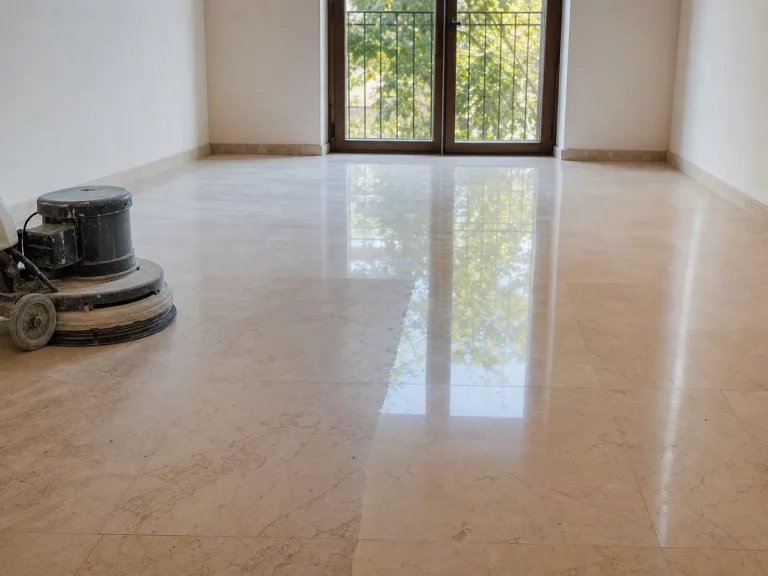
Buffing is a good option when marble has lost its luster but is not yet severely damaged. In other words, when the floor looks dull but has no significant scratches, stains, or irregularities.
In private homes, floor buffing can be done occasionally when it's noticed that the floor no longer reflects light as it once did. In apartment buildings, it can be part of a regular maintenance program to keep the entrance, stairwells, or landings looking their best.
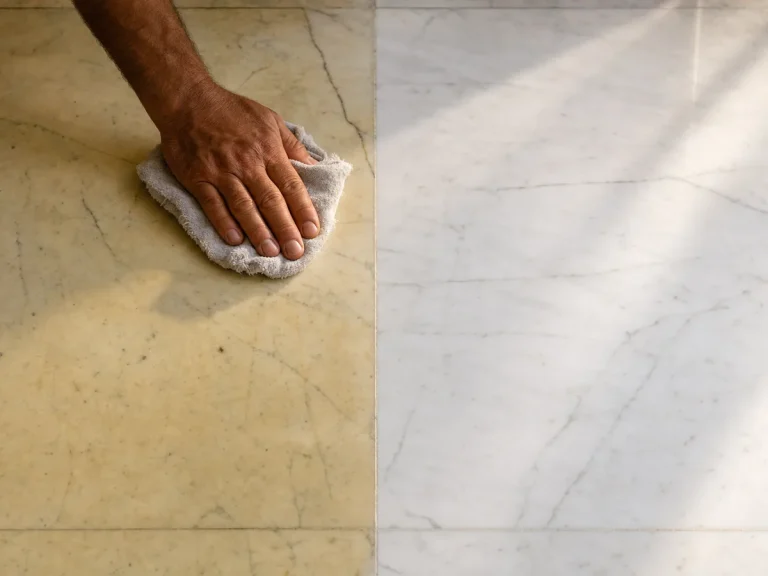
Buffing marble floors helps bring back the sense of cleanliness and visually improves the space. However, it doesn't fix deep damage. If the floor is badly worn, polishing will need to be considered.
When is it necessary to polish a marble floor
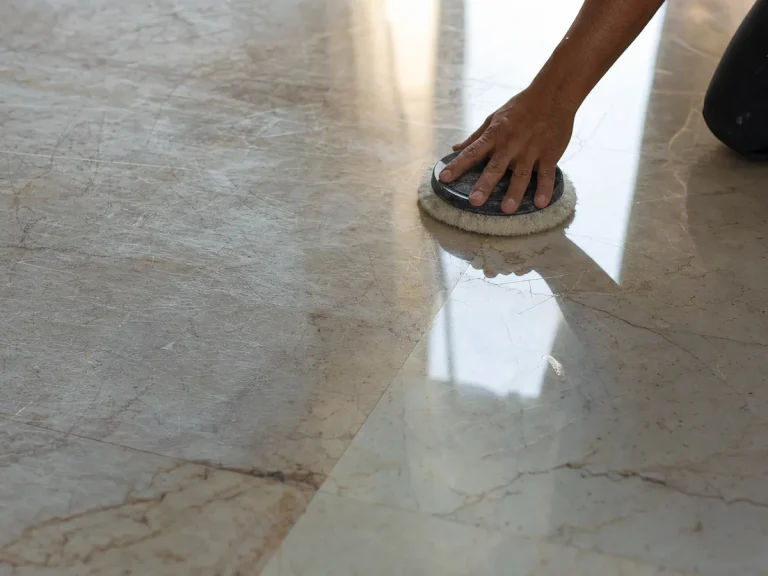
Marble polishing is recommended when the floor shows obvious wear. For example, very pronounced dull areas, visible scratches, surface stains, a general loss of shine, or clear differences between different areas.
Unlike buffing, polishing works on the surface layer of the floor. It corrects imperfections and prepares the marble for a finish such as buffing or vitrification.
In apartment buildings, polishing is often necessary when the entrance hall or staircases haven't been professionally maintained for many years. In private homes, it may be advisable after a renovation, before selling or renting a property, or when the marble has an aged appearance.
In many cases, polishing the floor means it doesn't have to be replaced. If the marble is good quality and the base is sound, restoring it is usually a more sensible, economical and respectful option than replacing the whole floor.
Marble vitrification to protect the finish
Vitrification is a treatment that adds shine and protection to the surface. It is usually applied after polishing or buffing to improve the durability of the finish and help the floor stay in good condition for longer.
In high-traffic areas such as apartment buildings, hotels, public buildings or shops, vitrification can be especially worthwhile. It helps protect the marble from daily wear and makes later maintenance easier.
Not all floors need the same finish. So before vitrifying, it's worth assessing the type of marble, how the space is used and the condition of the floor.
Differences between homes and apartment buildings
Even if the material is the same, maintenance isn't the same in a home as in an apartment building.
In a home, marble typically experiences less traffic and can be cared for more carefully. Wear and tear appears slowly, except in specific areas such as entryways, kitchens, or living rooms.
In an apartment building, the floor gets much more intensive use, and not everyone takes the same care. So shared areas need a more regular maintenance plan and, in many cases, professional treatments more often.
In apartment buildings, it's also important to plan the work to keep disruption for residents to a minimum. A good assessment shows whether buffing is enough or whether polishing and vitrification are needed.
Tips for preserving marble for longer
To keep marble in good condition, the most important thing is to be consistent and avoid basic mistakes.
Some helpful recommendations are:
- Clean with neutral products.
- Remove dust and sand frequently.
- Avoid acidic or abrasive products.
- Do not use excessive water.
- Place protectors on furniture.
- Use doormats at entrances.
- Clean up spills immediately.
- Protect the floor during construction or moving.
- Check the shine periodically.
- Consult professionals before applying waxes or special products.
These precautions help delay wear and keep the floor in better condition for longer.
Marble floor maintenance in Mallorca
In Mallorca, many marble floors are exposed to factors that can speed up wear: humidity, sand, foot traffic from outside, homes near the sea, busy apartment buildings or old buildings that need more careful maintenance.
That's why it's important to have a company that specialises in floor polishing in Mallorca when the floor starts to lose its shine or shows signs of deterioration.
At Projectes Sastre we have more than 50 years' experience in the treatment, restoration and maintenance of floors. We carry out polishing, buffing and vitrification of marble, terrazzo, granite, hydraulic tiles, concrete and other materials.
We work in private homes, apartment buildings, hotels, commercial premises, and public buildings. Each floor is assessed individually to apply the most appropriate treatment based on the material, use, and actual condition of the flooring.
Frequently asked questions about marble floor maintenance
What product should be used to clean a marble floor?
The best option is to use lukewarm water and a pH-neutral cleaner. Avoid acidic products, limescale removers, strong bleach, vinegar, or abrasive cleaners.
How often should marble be buffed?
It depends on usage and traffic. In homes, quite a bit of time can pass between treatments. In apartment buildings, entrances, or stairwells, more frequent maintenance may be necessary.
When should a marble floor be polished?
When the floor has scratches, dull areas, surface stains, a general loss of shine, or an aged appearance, polishing allows you to correct the surface and restore the flooring.
Is it possible to keep marble shiny without polishing it?
Yes, if the floor is in good condition and is cleaned properly. But when the surface is already worn, daily cleaning is not enough to restore its original shine.
Does marble in an apartment building need more maintenance?
Yes. Common areas have much more traffic than private homes, so wear and tear appears sooner. Entrance halls, stairwells, and landings often require regular inspections and maintenance.
Is it better to vitrify marble after polishing it?
In many cases, yes. Vitrification helps protect the finish and maintain the shine for longer, especially in high-traffic areas.
Conclusion
Maintaining marble floors in homes and apartment buildings requires a combination of proper cleaning, preventative measures, and professional treatments when needed. Using neutral products, avoiding harsh chemicals, and protecting the floor from scratches can significantly extend its lifespan.
When marble loses its shine, develops dull areas, or begins to show signs of wear, it's best to act before the deterioration worsens. Professional polishing, buffing, or vitrification can restore the floor's appearance, enhance the aesthetics of the space, and prevent the need for premature replacement.
Projectes Sastre Floor polishers in Mallorca since 1972, with a workshop in Inca: three generations polishing, vitrifying and restoring floors. Get to know us.