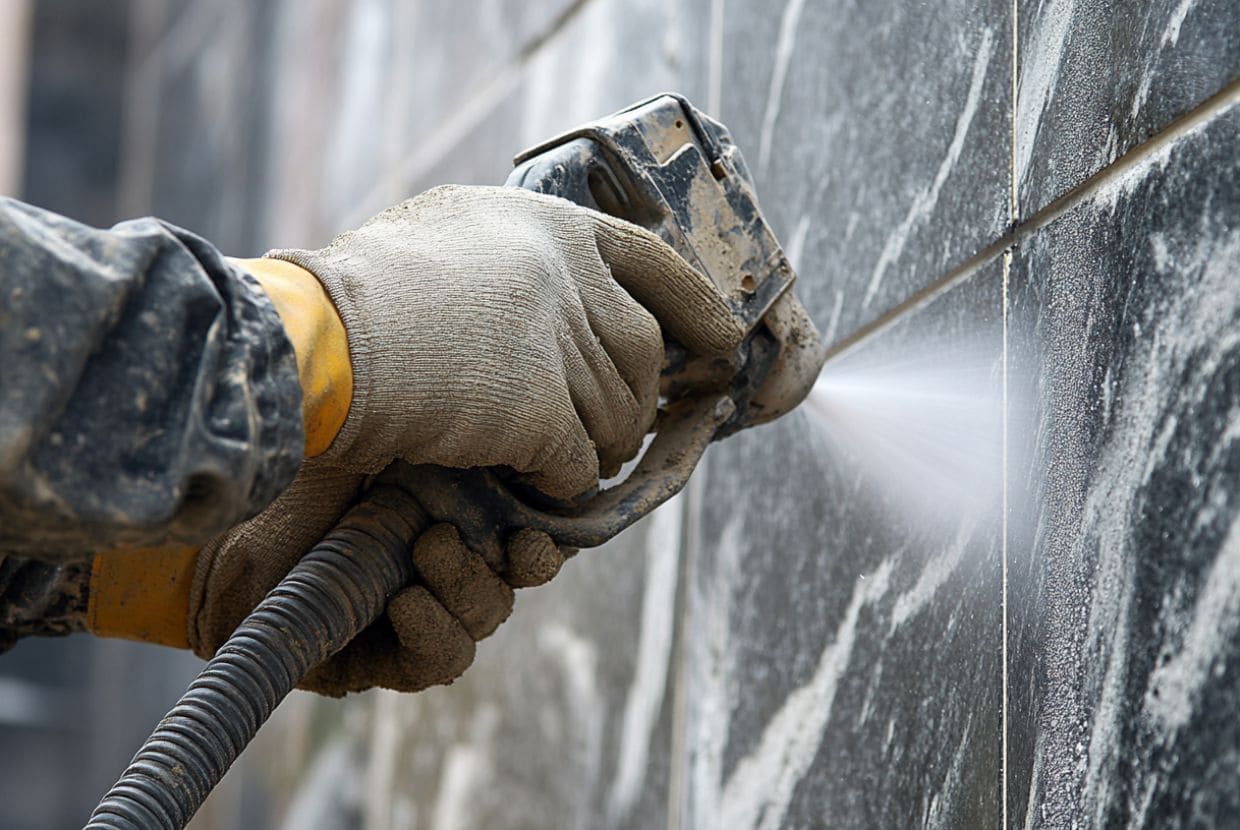
Understanding what sandblasting is used for is essential to implementing this process at the right time. Especially because cleaning surfaces and facades is a process with variable results, depending on the technique used. Removing residue and corrosion is much easier with sandblasting.
Here we'll teach you everything you need to know about the sandblast and the benefits of this cleaning technique.
What is sandblasting?
It's a technological treatment that involves compressed abrasive blasting. This blasting hits surfaces and facades at high speed, with the goal of removing all types of residue and dirt.
It's also important to mention that this technique uses different types of abrasives, such as glass microspheres and not just silica sand. Therefore, the treatment is adaptable to different surfaces and a variety of restoration and cleaning projects.
Understanding this concept is essential when learning about sandblasting. Especially because the treatment's efficiency requires advanced knowledge.
What is sandblasting used for?
Removal of coatings, paints and corrosion
It removes various types of coatings that cover a surface or wall. It removes them very effectively, leaving the space clean and ready for a new layer of coating. These coatings often wear out over time due to a lack of preventive care or other external factors.
When investigating what sandblasting is used for, coating removal isn't the only answer. This technique also produces good results on paintwork and structures affected by corrosion. It leaves them in pristine condition, ready for restoration.
Preparation and cleaning of surfaces for subsequent treatments
The blasting technique is commonly used to prepare surfaces before a new treatment. By removing damage and impurities, it returns the floor to its best condition. It is therefore ready for the application of a new coating that can last longer.
In terms of surface cleaning, this treatment is one of the best options today. If you're wondering what sandblasting is used for, this is one of its most common uses in all types of projects. It's also frequently used to remove graffiti from facades.
Restoration of floors, walls and metal structures
It's not only useful for replacing old or damaged structures, but also for restoring them. Sandblasting can restore surfaces, walls, and metal structures in an exceptional way. It restores their original appearance, removing contaminants and signs of wear.
Sandblasting offers both aesthetic and functional restoration. In other words, it improves the appearance of structures while reinforcing their durability and safety. Therefore, the results it produces last over time and help prevent accidents.
Is sandblasting recommended?
Because of the variety of uses available, understanding the uses of sandblasting will help you determine its viability for your personal projects.
Benefits in efficiency, cleaning and surface preparation
Using sandblasting on various surfaces produces efficient and positive results. Its benefits include:
- It allows for ecological cleaning without generating environmental pollution.
- It has the ability to clean, prepare and restore almost any surface.
- It is used to clean large surfaces in a short time.
- It has customizable applications to create textures or 3D effects on the floor.
- Eliminates imperfections for a perfect finish.
With the assistance of a team specialized in this treatment, you'll achieve additional benefits. From rust prevention to long-lasting coatings and much more. It's all a matter of understanding what sandblasting is used for and what projects it's recommended for.
Limitations and technical considerations to take into account
Before hiring a company specializing in this treatment, you should consider its limitations. In particular, keep in mind that its use on delicate surfaces such as glass and ceramics is not ideal. It can cause minor damage, and the quality of the results is not the same as on other floors.
In addition to the limitations, the following technical aspects of this procedure must be taken into account:
- It is necessary to use the appropriate abrasive for each particular surface.
- The pressure and flow of the jet must be set according to the level of cleaning.
- Safety equipment must be worn to protect against abrasive particles.
- Dust containment must be planned to prevent toxic contaminants.
- The media used during treatment must be recycled.
If you'd like more information on the topic, we recommend reading Does Sandblasting Damage Surfaces? Truths and Myths
Good practices and safety recommendations for sandblasting
Specialized professionals who understand the uses of sandblasting promote responsible sandblasting practices. These safety practices include the following:
Regulations and personal protection measures
- The use of a body protection suit is required to prevent damage during treatment.
- Special goggles, visors, or helmets must be worn to keep your eyes protected.
- Hearing protection is required due to the loud sound that can be generated by the spraying.
- Waste must be captured and recycled with cyclone separators and screening equipment.
- Measures must be put in place to reduce the release of dust into the environment.
Maintenance and correct use of the equipment
In many cases, simply understanding what sandblasting is used for isn't enough. You must also understand the proper maintenance techniques for your equipment, from daily inspections of air filters to weekly checks of pressure levels.
On the other hand, equipment should always be used in designated areas, protecting other areas to avoid damage. Specialized personnel must have safety equipment, while the equipment requires the appropriate parts. Specifically, the type of abrasive and nozzle must be adapted to the work surface.
At Projectes Sastre we are specialists in sandblasting cleaning
At Projectes Sastre, we have extensive experience and a detailed approach to help you with your projects. We specialize in sandblasting in Mallorca for cleaning, restoring, and preparing surfaces. Contact us through any of our channels to request a free quote.