Sometimes you look at your floor and think, "Wow, something's missing," but it's not always clear whether it needs a good polish or a vitrification to make it look brand new. The interesting thing is that, although both treatments seem almost the same when explained briefly, they work differently and serve different purposes.
Now, the idea is to understand what each technique offers so you're not going in blind. And when you have a clear understanding, choosing becomes much easier. So… let's go step by step to make your decision easier.
Polishing vs Vitrification: Key Differences You Should Know
When someone compares polishing with vitrification, they often think it's the same thing with a different name, but that's not the case at all. They are treatments that sometimes overlap, but each has its own distinct character. You notice it right away.
On the other hand, you know how it is: if you choose well, the ground changes "for real"; if you choose poorly, the effort is barely noticeable.
Differences in the final finish (natural shine vs sealed shine)
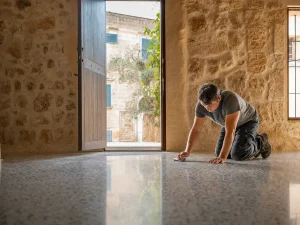
Polishing leaves a natural, elegant shine, one that seems to emanate from the material itself. It's a softer, cleaner shine, perfect if you want the floor to retain its original texture.
Vitrification, on the other hand, creates a protective layer that provides a more intense shine. Some say it "looks like a mirror," and it's true. However, it also has that sealed, very uniform finish, which is sometimes great in areas with a lot of light or foot traffic.
Differences in subsequent maintenance
This is where many people are surprised. Polishing requires gentler, almost routine care: cleaning, drying thoroughly, avoiding abrasive products, and little else. Sometimes, simply touching it up every few years is enough to bring it back to life.
Vitrified surfaces, on the other hand, are more durable, but they do require some care to prevent the protective coating from deteriorating: avoid dragging furniture, use neutral cleaning products, and refinish the vitrification periodically. Nothing dramatic, but it's good to know to avoid any unpleasant surprises.
Differences in durability and resistance to daily use
If your home is high-traffic or you have a business with constant foot traffic, vitreous enamel is usually the better choice. That hardened layer is more resistant to impacts, foot traffic, and occasional moisture. However, don't underestimate polishing: on marble, terrazzo, or granite, a good polish lasts a long time.
The key lies in the type of flooring. For some materials, polishing is more than enough, while for others, vitrification provides that extra resistance that makes all the difference over time.
Which one is better for your case: polished or vitrified?
This is the question that comes up again and again. And it makes sense, because from the outside both treatments seem similar, but they don't work the same way. Sometimes polishing is the logical choice; other times vitrification will save your floor for years.
On the other hand, every house, every business, and every floor has its own story, so there's no single "best" solution. The important thing is to see what the surface really needs and what you expect from the final result. That said, let's take it step by step.
Situations where polishing yields better results
Polishing is ideal when the floor has lost its shine, has scratches, old stains, or even a slight undulation that is noticeable when sweeping.
In these cases, restoring the material's inherent qualities works much better than covering it with a layer. Polishing, in the end, brings out the essence of marble, terrazzo, or granite, without artifice.
Situations where vitrification is the best option
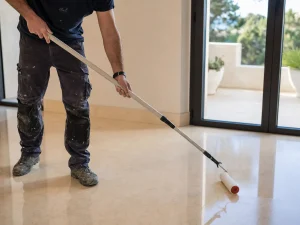
Vitrification, on the other hand, is perfect when you want a finish with presence. That uniform shine reflects light and gives a feeling of immediate renewal.
If the space has a lot of traffic, children, pets, or you're simply looking for something durable, vitrification works very well. It creates a protective layer that withstands impacts, moisture, and daily wear and tear.
However, it should be chosen when it adds value. For example, in commercial premises, building entrances, offices, or homes where the glossy finish helps to enhance the space. And when the goal is to protect, not just beautify.
Conclusion: Polished or vitrified? The answer depends on the floor and its use.
Ultimately, there's no one-size-fits-all solution. Some floors regain their charm with a good polish, while others benefit from the extra protection of vitrification. The important thing is to understand how the space is used, how the material ages, and what look you want when you see the floor every day. To compare prices as well, look how much it costs to vitrify a floor in Mallorca compared to the cost of polishing.
Therefore, in Projectes Sastre, specialists in polishing and vitrification of floors in Mallorca, we can help you choose the treatment your floor really needs.