Polishing a marble floor always seems like one of those tasks you can put off until "later," until one day you take a closer look and notice that the shine isn't what it used to be. It's normal: marble is beautiful, but it also appreciates a little TLC now and then.
Between footsteps, moving furniture, and that dampness that sometimes seeps in unannounced, wear and tear gradually appears.
The trick is knowing how often to polish it to keep it in top condition without overspending. If you want a clear and realistic idea, keep reading.
How often should a marble floor be polished?
The frequency of changes varies from person to person, even though people sometimes think marble has a fixed schedule. Nothing could be further from the truth. This material behaves a bit like skin: it shows signs of wear and tear depending on usage, humidity, or even the type of shoes worn indoors.
There are homes in Mallorca where the marble maintains a wonderful shine for years, and others where, between currents of fine sand coming in from the street or furniture being moved every now and then, it loses that polished look sooner than expected.
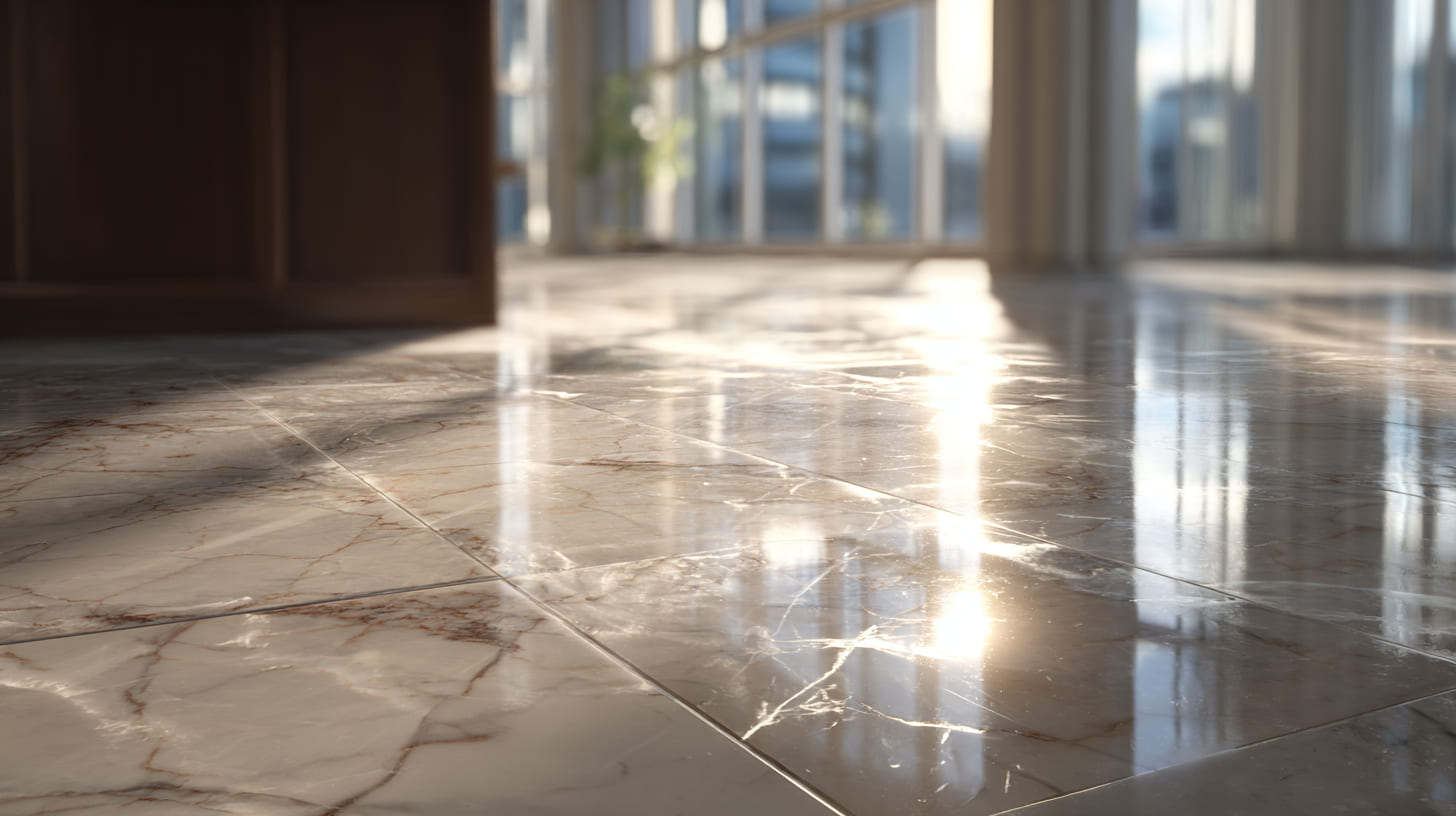
Now, if you're looking for a practical guideline, a marble floor typically needs polishing every two to three years. The key is to observe it carefully: when you see the shine starting to fade, duller areas appearing, or small scratches that no longer come off with regular cleaning, it's a sign that it's time.
On the other hand, in high-traffic areas, such as hallways or long corridors, it is usually necessary to polish a little earlier, since wear and tear is noticeable much faster.
How do you polish a marble floor?
Polishing marble is no easy task; it may seem simple from the outside, but it requires skill. The key is understanding what's being done at each stage and why, because removing deep scratches is not the same as restoring shine to a floor that's simply dull.
However, if you look at it calmly, the process is more logical than it seems.
1. Preparation of the area and necessary machinery
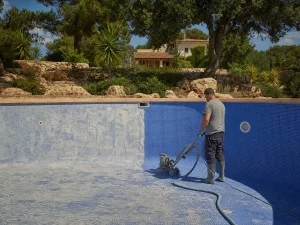
Before turning on the machine, it's time to prepare the space. This always takes a few extra minutes, but believe me, it makes a difference later. Remove furniture, protect the baseboards, and clean up any dust so that nothing interferes with the polishing.
On the other hand, the appropriate machine is chosen according to the type of marble and the condition of the floor, which is not something that is decided randomly; sometimes a heavier machine is needed and other times a lighter one is enough.
The disks are also checked, because a worn disk can leave marks that then cause more work than you imagine.
2. Grinding, honing and buffing
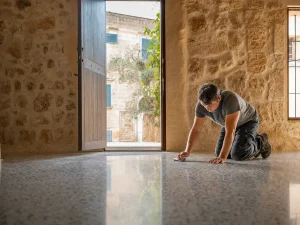
This is where the real work begins. Roughing removes deep scratches and leaves the surface level. Then comes polishing, which smooths the marble and eliminates those small marks that are only visible when the light hits them at a certain time of day. They're details you don't notice until you look closely.
Buffing is the final touch of this phase: it's when the floor begins to regain its natural shine and you see that brilliance again that had been lost over time.
3. Final sealing to increase durability
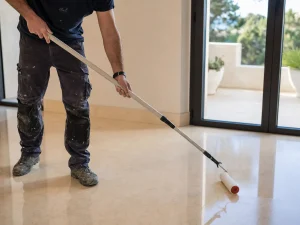
That said, the polishing doesn't end there. To make the marble last longer and prevent it from dulling so quickly again, a sealant is applied to protect it from stains, moisture, and daily wear and tear. It's a step many people overlook because it seems "optional," but ultimately, it's what prolongs the finish and prevents having to polish prematurely.
It's a discreet seal; it doesn't change the color or anything like that, but it does provide that extra resistance that is appreciated with daily use.
How much does it cost to polish a marble floor in Spain?
Keep in mind that you're not just paying for "polishing" itself, but for a series of steps: leveling, refining, polishing, and in many cases, applying a sealant to protect it.
When is it not recommended to polish marble?
While polishing is often the go-to solution for restoring dull marble, there are times when it's best to take a step back and assess the situation carefully. Sometimes the floor doesn't need a full polish, but just a light buffing.
Other times, the marble is so delicate that, if you insist, you can end up removing more of the layer than you should.
However, there are also situations where the marble has internal cracks or hollow areas. In these cases, it's best not to touch it until it's repaired, because the machine could widen the crack.
And when the marble is newly laid, it is advisable to wait a reasonable amount of time before polishing it, as it is still settling and any premature intervention may leave differences in tone.
So if you see moisture, loose parts, or a recent dullness caused by the wrong product, it's best to consult first and then act.
At Projectes Sastre we are specialists in floor polishing in Mallorca
At Projectes Sastre we've seen for decades floors that seemed lost forever, and with the right treatment, they regained a shine that even their owners had forgotten. It's all about knowing what each surface needs, because a marble floor in a living room is not the same as a communal landing that half of Mallorca passes through every day.
Our service of floor polishing in Mallorca seeks precisely that: to give each floor the finish that corresponds to it, without forcing it and without doing more than necessary.
If you need guidance, we are here to help you restore your marble to that clean, uniform, and pleasant appearance that is so noticeable when you enter your home.