How do you remove hydrochloric acid stains from a floor?
How to remove hydrochloric acid stains from marble, terrazzo or porcelain floors without making them worse, and when the damage can only be fixed by polishing.
- Updated 3 September 2026
- 6 min read
- Projectes Sastre, since 1972

Stains caused by hydrochloric acid (aguafuerte or salfumán in Spain, also known as spirits of salts) are one of those problems that turn up when you least expect them, and they are as delicate as they are hard to fix. Although it's often used for cleaning, it is very aggressive and can cause permanent damage to many types of floor if it isn't handled carefully. So knowing how to remove acid stains from a floor isn't just useful: it can make the difference between a floor damaged for good and one that looks like new again.
What causes acid stains?
Hydrochloric acid reacts chemically with the minerals in many floors, especially those containing calcium carbonate, such as marble, terrazzo or limestone. The result? Whitish, dull, sometimes rough marks that won't come out with a mop or ordinary cleaning products. On ceramic or porcelain floors, it can damage the glaze and leave dull patches.
Understanding this reaction helps you anticipate and, above all, act wisely when it comes to correcting the damage.
Before you do anything: identify the type of floor
Not all floors react to acid in the same way. In fact, the differences are marked, and they largely determine the treatment. So the first thing is to know what you're dealing with:
- Marble and travertine: very vulnerable to acid.
- Terrazzo: as a mix of marble and cement, it is also badly affected.
- Glazed ceramic and porcelain tiles: they can lose their shine or change colour.
- Polished concrete and microcement: they tend to turn white or feel rough to the touch.
This information will help you avoid making mistakes that could make the problem worse.
How to remove acid stains from marble floors
When hydrochloric acid comes into contact with marble, the result is called etching, a kind of “engraving” of the surface. You'll notice it because the area looks dull, with a whitish tone.
- Step 1: neutralise. Always start by applying bicarbonate of soda and water to stop the acid working.
- If the damage is minor: there are home polishing kits for marble that can help you bring back the shine in small areas.
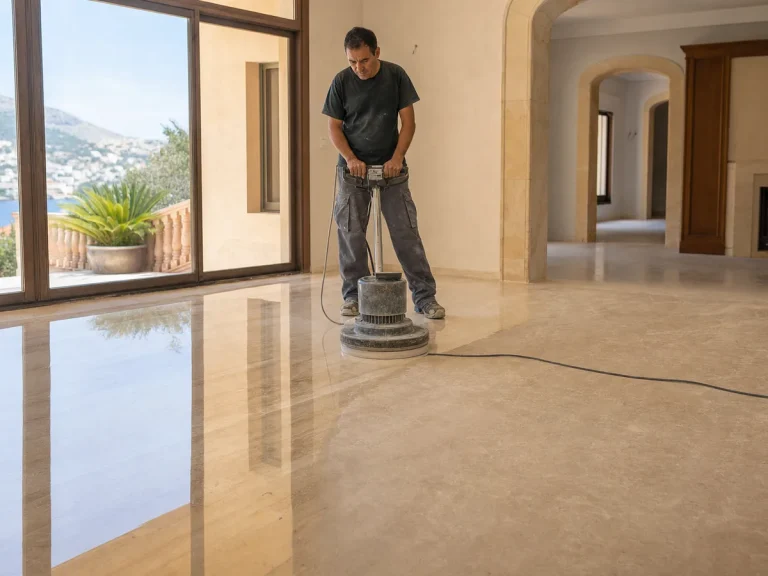
- If the damage is deeper: the most effective option is mechanical polishing with diamond discs, followed by buffing.
Here, rather than cleaning, what's needed is to restore the surface.
How to remove acid stains from terrazzo floors
Terrazzo combines marble and cement, so the acid attacks it twice over.
- Neutralise the area: apply bicarbonate of soda directly to the stain and rinse with plenty of water.
- In mild cases: a very light sanding can improve its appearance considerably.
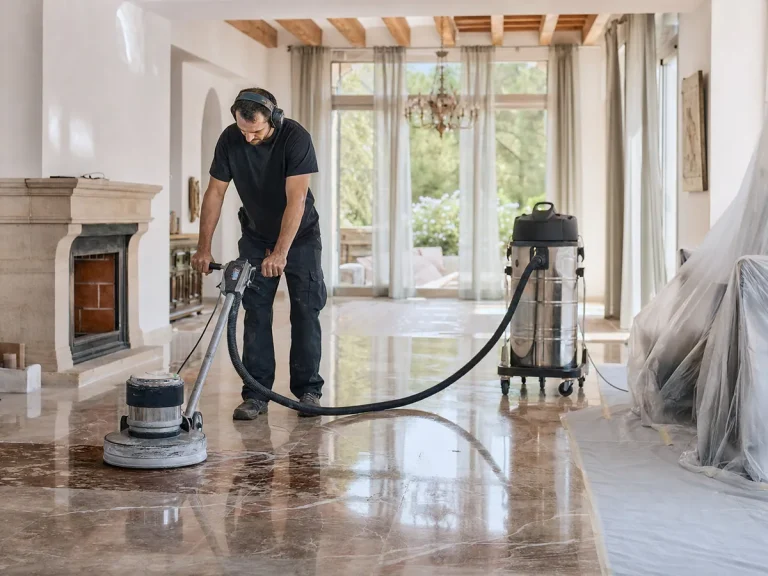
- For severe stains: the best option is to grind the floor down completely, followed by professional polishing and crystallisation to bring back the shine and close the pores of the material.
How to remove acid stains from porcelain or ceramic floors
These floors are tougher, but that doesn't make them invulnerable. Hydrochloric acid can dull the glaze or leave the surface uneven.
- If the acid is fresh: it's best to use an alkaline cleaner formulated to remove building residue and acidic products.
- If the glaze is already damaged: there's not much you can do with home products. If the tile has lost its shine or colour, the most viable option is usually to replace it.
How to remove acid stains from polished concrete or microcement floors
This type of floor is porous, and the acid opens up the pores and leaves whitish marks.
- First step: bicarbonate of soda and water to neutralise it, followed by a good rinse.
- If the damage is superficial: you can try sandpaper or fine diamond pads to even out the area.
- If it's more serious: the whole surface will need repolishing and a new coat of a specific microcement protector.
Here, rather than cleaning, it's about giving the floor back its finishing layer.
Safety tips if you work with hydrochloric acid
This product is no joke. If you're going to use it, or need to deal with an affected area, take care with the following:
- Wear gloves and safety goggles, and ventilate the room well.
- Never mix it with bleach or ammonia (it can give off dangerous gases).
- Always have bicarbonate of soda to hand in case you need to neutralise it quickly.
When to call in the professionals
There are times when home remedies aren't enough, and forcing the situation can make things worse. For example:
- If the stain covers a very large area.
- If the floor has lost its shine overall.
- If the marble or terrazzo has visible etching or hollows.
- If some ceramic tiles can no longer be saved.
In all these cases, it's best to turn to a specialist service that knows how to remove acid stains from floors without putting the material at risk.
At Projectes Sastre we specialise in floor polishing in Mallorca
If your floor has had an accident with acid and you're not sure how to remove the stains, at Projectes Sastre we can help. We have the experience, the specific tools and the know-how to restore all kinds of floors: marble, terrazzo, microcement, granite and more.
Our floor polishing service in Mallorca is designed to give every surface back its original shine, evenness and protection. If you need advice, we're here to help you get your floor back the way you like it: clean, well-kept and stain-free.
Frequently asked questions about acid stains on floors
Can hydrochloric acid stains be removed from a marble floor?
Yes, but not by cleaning. Hydrochloric acid doesn't dirty marble: it dissolves the surface and leaves a dull, rough mark, which is material that has been lost. No cleaning product can bring it back. It is corrected by polishing the area to grind the surface down until it's level, then bringing back the shine with buffing or crystallisation. Small marks can be treated on their own.
What should I do if I've just spilt hydrochloric acid on the floor?
Neutralise and dilute it as soon as possible: cover the area with plenty of water and add bicarbonate of soda to slow the reaction. Don't rub, or you'll spread the acid over a larger area. Then dry with a clean cloth. Every minute counts: on marble and terrazzo the attack is immediate, and the longer the acid is in contact, the deeper the mark.
Why does hydrochloric acid leave white marks on terrazzo?
Because terrazzo contains cement and limestone aggregates, and the acid reacts with the lime and dissolves it. What's left exposed is the aggregate and open pores, which reflect light differently and look whitish or dull. It isn't a layer of dirt on top: it's the material itself, corroded. That's why scrubbing harder doesn't help and often spreads it.
How much does it cost to repair a floor damaged by hydrochloric acid in Mallorca?
If the mark is in one spot, the local repair is priced per job and is usually inexpensive. If the damage covers a whole room, the usual approach is to polish the entire room so the finish is even, at €10-25/m² in 2026 depending on the material. Polishing just the stain on a large floor leaves a patch that's shinier than the rest, and it shows.
Projectes Sastre Floor polishers in Mallorca since 1972, with a workshop in Inca: three generations polishing, vitrifying and restoring floors. Get to know us.