In a building, the floor endures everything: thousands of footsteps, rainwater, trolleys coming and going, the scuffs of movers... and, over time, it shows. The surface loses its shine, scratches appear, the pores open, and no matter how much you clean it, it no longer looks the same. This is precisely where floor polishing in residential buildings makes sense. There's no need to do any work or lift anything: simply restore the floor's original appearance, making daily maintenance easier and extending its useful life.
Why floor polishing is worth it in communities
Because the floor is one of the first things you notice upon entering. A well-maintained entrance conveys order, creates a sense of security, and improves the building's image. And it's not just a matter of aesthetics. From an economic standpoint, floor polishing in residential buildings allows you to postpone the expense of replacing the entire floor for years, at a much lower cost per square meter.
In addition, a well-leveled and sealed floor gets less dirty, requires fewer harsh products, and is easier to clean. All of this saves maintenance staff time and effort and creates a healthier environment for residents. It also prevents common problems: fewer slips, fewer stubborn stains, and fewer complaints.
What materials can be polished (and how each one responds)
Not all floors behave the same. That's why it's key to understand the material before you begin.
Marble, for example, is perfect if you're looking for a glossy finish. To achieve a good shine, it requires a good polishing sequence and crystallisation to set the result.
Terrazzo is very common in communities. A good polish closes the pores and achieves a more uniform surface, without unusual reflections or areas that appear "foggy."
Granite is extremely hard, so it requires specific tools and a little more time. The advantage is that the result lasts much longer.
Indoor concrete can be finished in a range of matte to semi-gloss finishes. When used with a good densifier and suitable sealer, it is durable, easy to clean, and free of the fine dust it sometimes generates.
Glossy or matte finish: more than just a matter of taste
Choosing between gloss, satin, or matte depends on the type of space, the light, and the intended use.
In large, well-lit hallways, a glossy finish can look spectacular. But if there are many sidelights or glass walls, a satin finish may be more practical, as it better hides micro-scratches. On staircases, for example, a satin finish helps maintain a uniform appearance between steps and landings, without uncomfortable shine or obvious marks. We recommend reading: Matte or Glossy Floors: How to Choose the Ideal Finish for Your Home
When and how often to polish
Every community has its own rhythm. A quiet block isn't the same as a busy one. But there are some useful guidelines.
In heavily trafficked entrances, it's recommended to check the gloss and seal every three months. If there's a store on the ground floor or a direct street entrance, it may be advisable to do so every two months. On stairwells, semiannual maintenance is usually sufficient to maintain a good appearance.
And when streaks start to show through the light, stains that won't come off, or areas with varying levels of shine, there's no doubt: it's time for a deep polish. If you seal it well afterwards and choose the right finish, the result will last much longer.
How floor polishing is done in communities
It all begins with a technical inspection of the flooring. The type of floor, its hardness, overall condition, any stains (from construction, rust, grease, etc.), and any loose pieces are analyzed. From there, a zone-by-zone plan is designed to avoid disrupting the building's normal operation: one half of the entrance, alternate flights of stairs, even-numbered or odd-numbered landings, as appropriate.
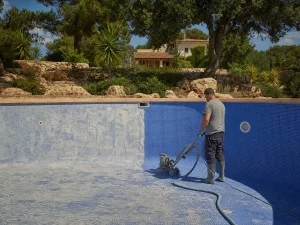
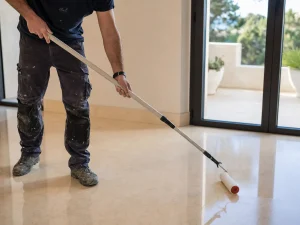
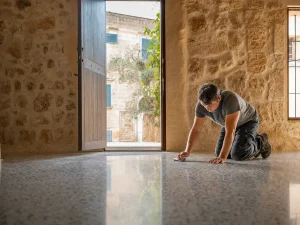
The process involves several stages. First, the surface is leveled with progressive-grain abrasives. It is then thoroughly cleaned and dried. The pores are then sealed and, depending on the desired finish, buffed or satin-finished. The ultimate goal is a homogeneous, durable, and easy-to-maintain floor.
Safety, accessibility and phased work
Throughout the entire process of floor polishing in Mallorca, both the outcome and the convenience of the residents are carefully considered. Alternative routes are clearly marked, areas near the work site are protected, machinery with dust extraction systems is used, and curing times are respected before reopening the road.
On garage ramps or areas with frequent moisture, leveling and sealing can be combined with anti-slip treatments to maintain safety without sacrificing a clean and well-maintained finish. Everything is planned in phases so that floor polishing in residential buildings is as disruptive as possible, even in high-traffic buildings.
How much it costs and how to optimize your budget
The price depends on several factors: the actual square footage, the number of steps, the type of material, the condition of the floor, whether there is a service elevator, the hours during which work can be done (nights, holidays, etc.), and whether specific treatments are required, such as descaling, anti-slip sealing, or water-repellent products.
Many communities opt for annual contracts. This way, scheduled visits are established, urgent needs are prioritized, and prices are adjusted based on volume. Requesting a clear, detailed quote by area also helps avoid surprises and make realistic comparisons between proposals.
Ultimately, allocating a small portion of the community fund to polishing floors in communities is a way to protect a larger investment: the pavement itself.
Warning signs and common mistakes
There are some clues that the floor needs attention.
"Islands" of shine, for example, often appear when household buffing products are applied only to certain areas. Streaks visible against the light indicate an open pore or improperly used buffing pads. And if the stains return shortly after cleaning, the sealing was probably inadequate.
There are also attempts at DIY polishing without the proper machinery or technique. The result is often more dust than shine. The best solution is a professional evaluation and including polishing in the building's overall maintenance plan.
Daily care that really works
Between polishing, there are simple routines that help maintain the result.
Mop with a mild detergent and warm water, without waxes or film-forming products. Place sturdy doormats at entrances to prevent moisture and grit from entering. Use microfiber mops daily in high-traffic areas. And protect the bases of planters and janitorial cabinets with adhesive tape.
With this care, the shine lasts longer, the seal is maintained, and the time between treatments is extended.
How to know if maintenance is working
Measuring is useful, even with simple indicators.
How many incidents due to stains or slips occur between visits? How long does it take to clean stairs and entrances? How many liters of product are used per month, and what is the level of aggressiveness? What do neighbors say at meetings?
If the number of incidents decreases and cleaning is done more quickly, it's a good sign. If the shiny patches return or complaints increase, it may be necessary to move up the next service or revise the chosen finish.
Frequently Asked Questions
Is a shiny floor more slippery?
Not necessarily. Proper leveling and sealing achieves shine without losing grip. Anti-slip treatments can be applied to wet areas or ramps.
How long does the polishing effect last?
It depends on the use and the type of daily cleaning, but with good maintenance it can last several months.
Can you work while the building is in use?
Yes. It is planned in sections and alternate routes are maintained so that traffic is not interrupted.
How often is a deep polish advisable?
When pronounced scratches, stains that won't come off, or areas with a different shine begin to appear, it's time to re-polish the floors in your community and renew the seal.
Floor polishing in Mallorca: experience and personalized attention
At Projectes Sastre we have been offering services for years floor polishing in Mallorca, always with a personal approach tailored to each community. If your building's entrance or stairwells have lost their uniformity, we design a customized plan with scheduled visits, minimal disruption to daily life, and measurable results. If your community is in the capital, we also offer this service Floor polishing in Palma.
We work with integrated vacuum equipment, specific abrasives for each type of material, and high-performance sealants. You can request a free technical visit. We'll provide you with a clear schedule, a fixed quote, and practical advice to extend the results of your floor polishing in Mallorca.