Protecting outdoor floors in coastal areas: fighting damp and salt in Mallorca
Not sure how to restore an outdoor floor damaged by damp and salt in Mallorca? Discover professional polishing and vitrification techniques.
- Updated 8 November 2026
- 5 min read
- Projectes Sastre, since 1972
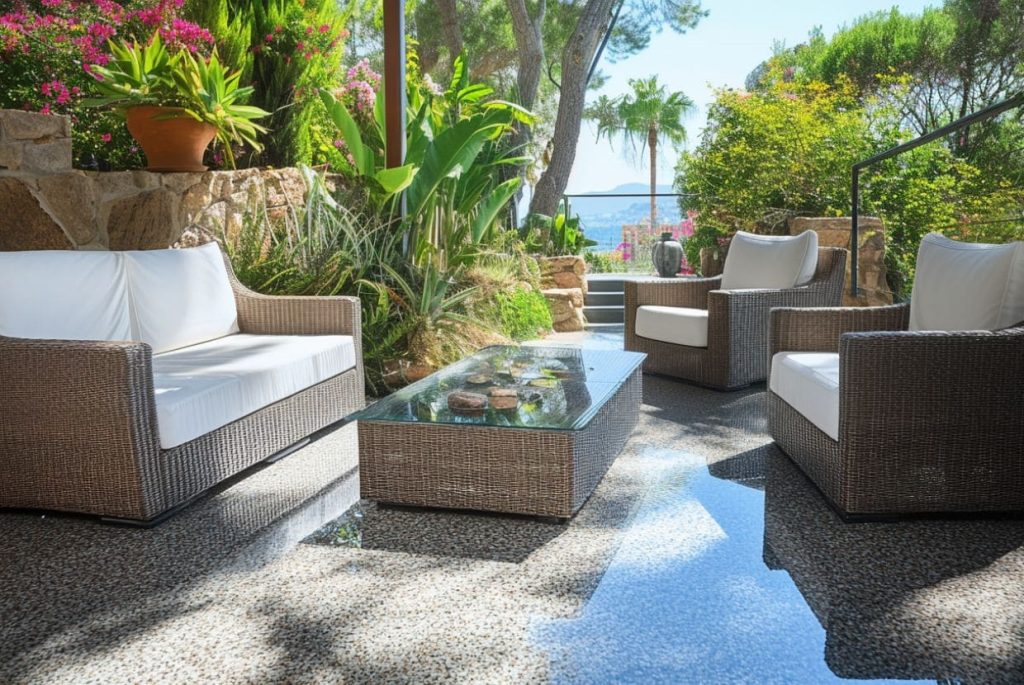
Mallorca may be a dream paradise and a jewel of the Mediterranean, but its geography poses a silent, serious challenge for outdoor floors: persistent damp, corrosive salt and abrasive sand. Each of these factors, combined with the warm climate and salty breezes, speeds up the deterioration of paving and terraces. And the damage affects not only appearance but also safety and functionality. That's why we're going to look at how to restore an outdoor floor and get it right first time.
Find out all the details here!
Factors that damage outdoor floors in coastal areas
In Mallorca we live with natural elements that, without the right care, can become silent enemies of outdoor floors.
These factors affect not only the look of outdoor spaces but also their safety, functionality and durability. However, there are ways to restore an outdoor floor that make a real difference.
The effect of salt and damp
Salt and humidity are the main enemies of coastal floors. Their main consequences are:
- Corrosion: of metal elements (joints, gratings) and mortar, causing rust and crumbling.
- Efflorescence: On limestone, terrazzo or concrete floors, white spots appear due to the crystallisation of salts on the surface.
- Detachment: in tiles and paving, salt weakens the adhesive layers and causes cracks.
Effects of damp
- Swelling and cracking: in untreated wood (such as pine or teak), moisture gets in, warping boards and rotting the fibres.
- Growth of micro-organisms: moss, algae and mould grow on damp surfaces, creating slippery, unsightly areas.
How wind and sand wear floors down
If you're not sure how to restore an outdoor floor, it helps to know that coastal wind carries sand and dust particles that act like constant sanding on floors:
Surface abrasion
- On microcement, wood, or glossy ceramic floors, sand creates micro-scratches that dull the finish.
- On porous paving, sand becomes embedded, speeding up wear.
Erosion of joints and seals
Mortar or silicone joints weaken, letting in water and salt.
How to restore an outdoor floor: techniques and materials
When you're wondering how to restore an outdoor floor damaged by the coastal climate, techniques such as polishing with diamond discs, renewing joints with epoxy or polyurethane resins and using varnishes with quartz particles are essential.
These solutions not only bring back the look of the floor but also make surfaces more resistant to damp, wind and wear, ensuring durability in demanding settings like Mallorca. Investing in these professional methods means functional, safe floors that look immaculate.
Polishing and vitrification methods for outdoor floors
Restoring an outdoor floor in coastal areas such as Mallorca requires specialist methods that combat the wear caused by salt, damp and sand.
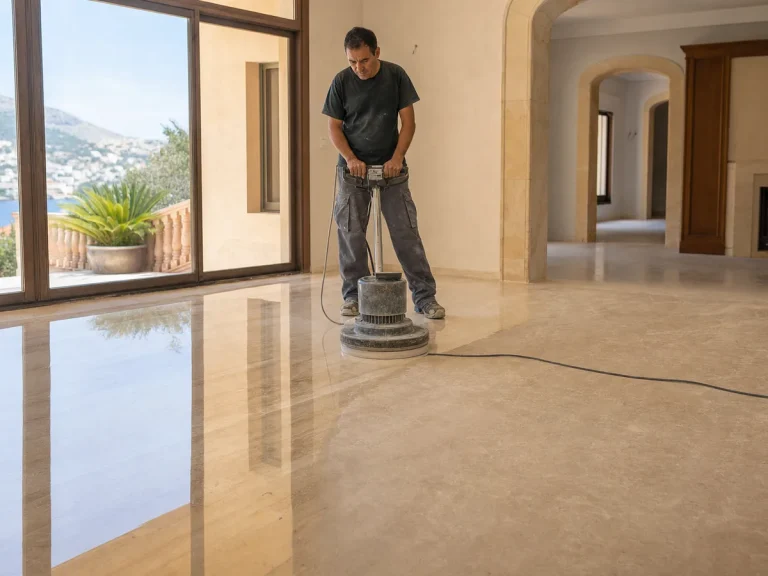
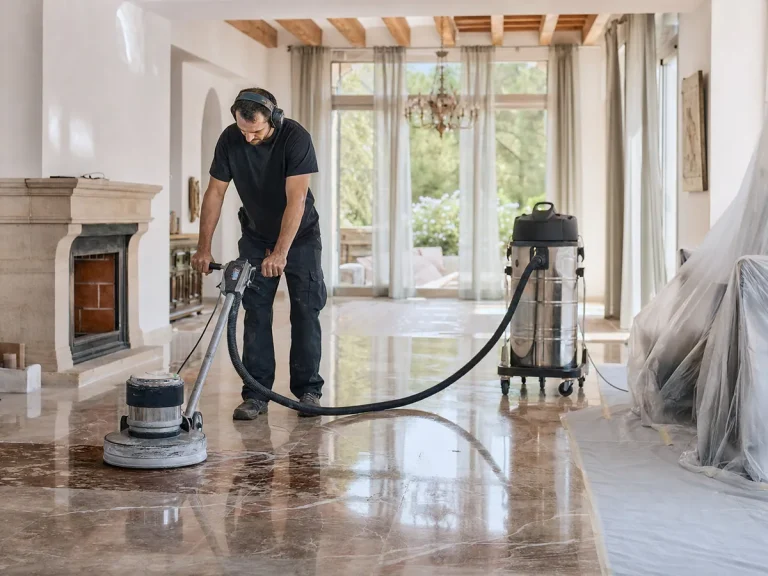
The process starts with polishing with diamond discs, ideal for concrete or natural stone floors, which removes eroded layers and restores a smooth surface.
A vitrification coat of acrylic or epoxy resin is then applied, which not only brings back the lost shine but also creates a barrier against UV rays and sand abrasion.
Applying sealers and waterproofing products
For complete protection, it's crucial to apply sealers and waterproofing products:
- Nanoporous sealers: these stop salt and moisture from being absorbed by porous materials (terrazzo, brick), preventing cracks and efflorescence; ideal when you're wondering how to restore an outdoor floor.
- Siloxane-based waterproofers: these reinforce joints and cracks, preventing leaks in wood or composite floors.
Combined with high-resistance varnishes, these techniques not only restore the original look but also extend the life of the floor.
Preventive maintenance and care tips
Knowing how to restore an outdoor floor starts with proper preventive maintenance, especially in coastal areas such as Mallorca, where salt, humidity and sand speed up deterioration. These tips and routines will help you preserve your floors and reduce the need for major restorations:
Cleaning routines for coastal areas
Daily/weekly cleaning:
- Sweep with a soft-bristled brush to remove sand and dust without scratching.
- On wooden decking, use an outdoor vacuum that doesn't kick up abrasive particles.
Monthly cleaning:
- Low-pressure washing with lukewarm water and a neutral detergent (pH 7).
- On stone floors, apply a descaler to remove ingrained salt deposits.
Recommended products and seasonal care
For stone/concrete floors:
- Nanoporous sealers: repel salt and moisture without changing the texture.
- Anti-algae cleaners: prevent moss in shady areas.
For wood:
- UV-filter oils: protect against sun and salt.
- Quartz varnishes: resist sand abrasion.
For joints and cracks:
- Marine epoxy resins
Frequently asked questions about restoring outdoor floors with polishing and vitrification
How often should the floor be restored?
It depends on the material and how exposed it is to the coastal climate.
Can every type of floor be restored?
Yes: outdoor floors can be restored in materials such as concrete, natural stone (marble, granite), terrazzo, treated wood, composite and brick, with techniques such as polishing, vitrification or sealing.
However, it isn't recommended for badly cracked ceramic tiles, rotten wood or UV-damaged synthetic floors, where restoration may be short-lived or impossible.
What results can you expect after treatment?
With techniques such as professional polishing, vitrification and sealing, floors regain their original look (removing scratches, damp stains and efflorescence).
When it comes to restoring an outdoor floor, these techniques give it extra protection against salt, sand and UV rays, and make it safer with non-slip surfaces in wet areas.
Projectes Sastre: your outdoor floor restoration experts
We are experts in bringing outdoor floors damaged by salt, damp and sand back to life. If your terrace floor is wood, marble, terrazzo, granite, concrete, hydraulic tiles or stone paving and looks worn, cracked or dull, our professional polishing and vitrification treatments are the answer.
At Projectes Sastre we specialise in floor polishing and vitrification in Mallorca. Get in touch so we can give you personal advice and send you a tailored, no-obligation quote. We look forward to hearing from you! On the south-west coast, salt is especially hard on terraces and pool surrounds, and we explain how we tackle it on our page about floor polishing in Calvià.
Projectes Sastre Floor polishers in Mallorca since 1972, with a workshop in Inca: three generations polishing, vitrifying and restoring floors. Get to know us.